



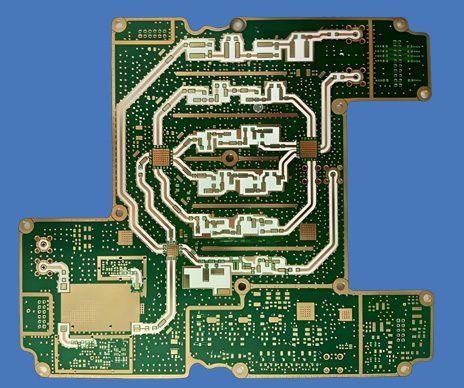


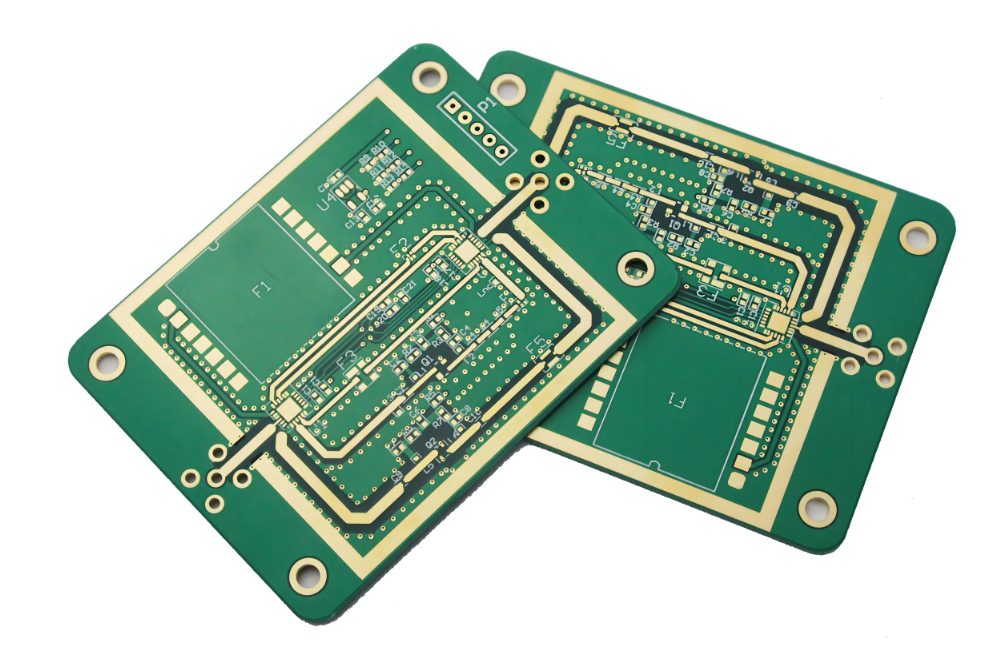
With two decades of hands-on expertise in high frequency printed circuit boards (High Frequency PCB), we’ve witnessed firsthand how subpar signal transmission can cripple electronic devices. From our early days perfecting low-loss designs to now powering cutting-edge applications like 5G infrastructure and satellite systems, one truth remains: a high-performance High Frequency PCB is the backbone of reliable high-frequency signal transmission.
Why Choose Us? – Three Core Advantages for Your Business
① 99% On-Time Delivery: Your Project Timeline, Our Priority
- Standard Prototyping: 5-7 working days for detailed validation
- Expedited Service: 48-hour rush prototyping for urgent R&D needs
- Mass Production: 250,000 sq.ft monthly capacity with scalable workflows
② End-to-End Turnkey Solutions: From Concept to Compliant Product
- High-Frequency Design Expertise: 20+ senior engineers specializing in impedance matching and EMC pre-compliance
- Rapid Prototyping: Laser drilling (20μm precision) and 50μm linewidth etching for design accuracy
- Certified Manufacturing: IATF 16949-certified factory supporting seamless transitions from 10 to 100,000+ units
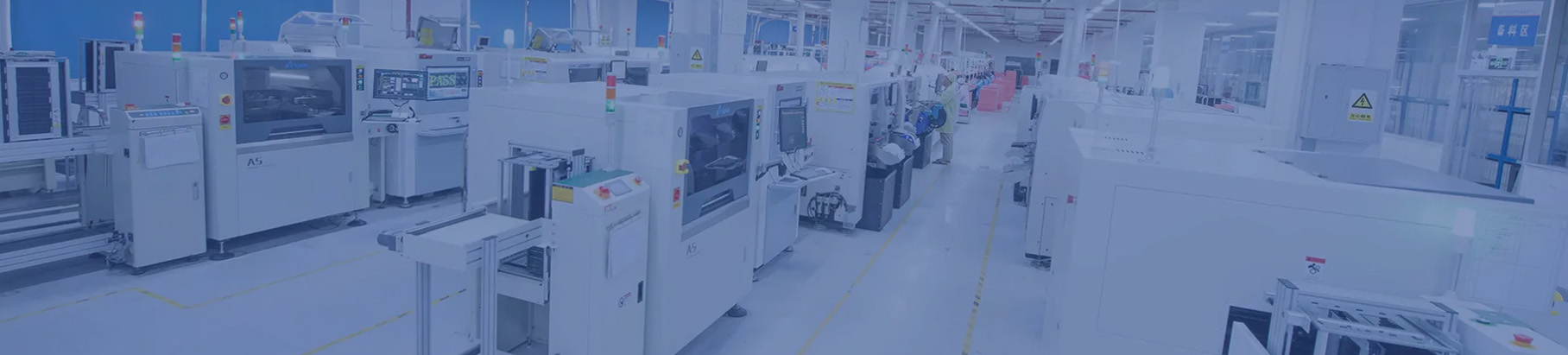
- Full Assembly Capability: 10 SMT lines for 0201 component placement + comprehensive functional testing
③ 0.3% Defect Rate: Uncompromising Quality for Critical Applications
- Material Validation: 100% batch testing for dielectric constant (±2% tolerance) and moisture resistance
- Process Control: AOI inspection for 100% circuit integrity + X-Ray hole copper thickness mapping (25μm minimum)
- Rigorous Testing: 85℃/85%RH aging for 48 hours + signal integrity testing at target frequencies
What is High Frequency PCB? – Engineered for Signal Purity at Scale
Standard PCBs falter above 1GHz due to three critical issues:
- Dielectric Loss: Traditional FR-4 loses 1.2dB/in, equivalent to a 30% signal energy drain
- Impedance Discontinuity: Right-angle traces cause 50% signal reflection, distorting high-frequency signals
- EMI Noise: Uncontrolled trace routing increases crosstalk by 40% in dense layouts
Our High Frequency PCBs address these with:
- Advanced Materials: Rogers 4350B substrates (0.3dB/in loss at 1GHz) for 60% lower signal decay
- Structural Precision: Microstrip designs with 45° angles + blind vias, reducing reflection by 40%
Three Technical Advantages That Define High Frequency PCB
| Performance Metric | Standard PCB | ThinDry High Frequency PCB | Operational Impact |
|---|---|---|---|
| 1GHz Signal Loss | >1dB/in | 0.45dB/in (Rogers 4350B) | Enables 2x longer signal transmission distances |
| Impedance Control | ±10% tolerance | ±5% tolerance | Supports PCIe 5.0 and HDMI 2.1 protocols |
| Thermal Stability | ≤125℃ | ≤180℃ (氰酸酯基板) | Reliable in automotive engine bays (150℃ sustained) |
Design Best Practices for High-Frequency Performance
① Trace Routing: The “3S” Principle
- Short: Limit trace length to <10cm; every 5cm adds 15% loss (e.g., 20cm trace = 30% additional loss)
- Straight: 45° angles reduce reflection coefficient from 0.5 to 0.3 (40% improvement)
- Simple: ≤3 vias per signal path; buried vias cut via loss by 30% compared to through-hole
② Layer Stackup Strategy
- Dielectric Selection: Use low-Dk materials (Dk <3.5) for 20% lower propagation delay
- Ground Plane Design: Full ground plane coverage reduces EMI radiation by 50%
High Frequency vs. High-Speed PCBs: Key Distinctions
| Characteristic | High-Speed PCB (e.g., Server Boards) | High-Frequency PCB (e.g., Radar Modules) |
|---|---|---|
| Core Challenge | Signal edge rate (<1ns rise time) | Frequency stability (>1GHz operation) |
| Critical Material | High TG FR-4 for thermal stability | Low Df ceramics/PTFE for dielectric loss |
| Design Focus | Topology optimization | Impedance continuity and material selection |
| Typical Loss | 0.8dB/in at 1GHz (FR-4) | 0.3dB/in at 1GHz (Rogers 4350B) |
Four Growth Markets Driven by High Frequency PCB
① 5G & 6G Infrastructure
- Base stations: 28GHz millimeter-wave PCBs enable 1km+ coverage with 30% fewer towers
- Mobile devices: Antenna feed optimization boosts 5G reception by 25% in urban environments
② Satellite Communications
- LEO/GEO satellites: Radiation-resistant PTFE PCBs for -55℃ to +125℃ operation
- Ground stations: Low-loss designs improving signal-to-noise ratio by 20%
③ Autonomous Vehicles
- Millimeter-wave radar (77GHz): High-temperature PCBs enabling 200m obstacle detection
- Vehicle-to-everything (V2X): 5G-V2X modules with <1ms latency for collision avoidance
④ Industrial IoT
- High-temperature sensors: 180℃-rated PCBs for real-time furnace monitoring
- Precision equipment: Low-noise designs supporting 0.1μV-level signal acquisition
20 Years of Crafting Signal Integrity
From solving prototype failures for startups to delivering mission-critical PCBs for global enterprises, our focus remains unchanged: turning high-frequency challenges into competitive advantages for our clients.
Ready to Optimize Your Design?
- Free Signal Loss Analysis: Our engineers will review your design for potential improvements (over 300 successful analyses to date)
- Material Expertise: Access to 10+ high-frequency substrates (Rogers, Isola, Shengyi) with 24-hour quotation turnaround
- Risk Mitigation: DFM reports identifying manufacturability issues before production (reducing costly redesigns by 40%)
Contact us at [email protected] with your project requirements – we’ll respond with a tailored solution within 24 hours. Trust the partner that understands high-frequency signals as deeply as you understand your application.