




Bare PCB boards are commonly reviewed under HS heading 8534, which covers printed circuits. But that answer only applies when the board is unpopulated. Once the shipment becomes a PCBA, control board, power supply board, LED module, communication module, cable assembly, or electronic spare part, the correct customs code may move to a different heading based on function and end use.
For most importers, the valuable answer is not only “PCB = 8534.” The useful answer is a related-product code map: which nearby products are often confused with bare PCB boards, what heading to start checking, when the code may apply, and when a broker must classify by the final product function.
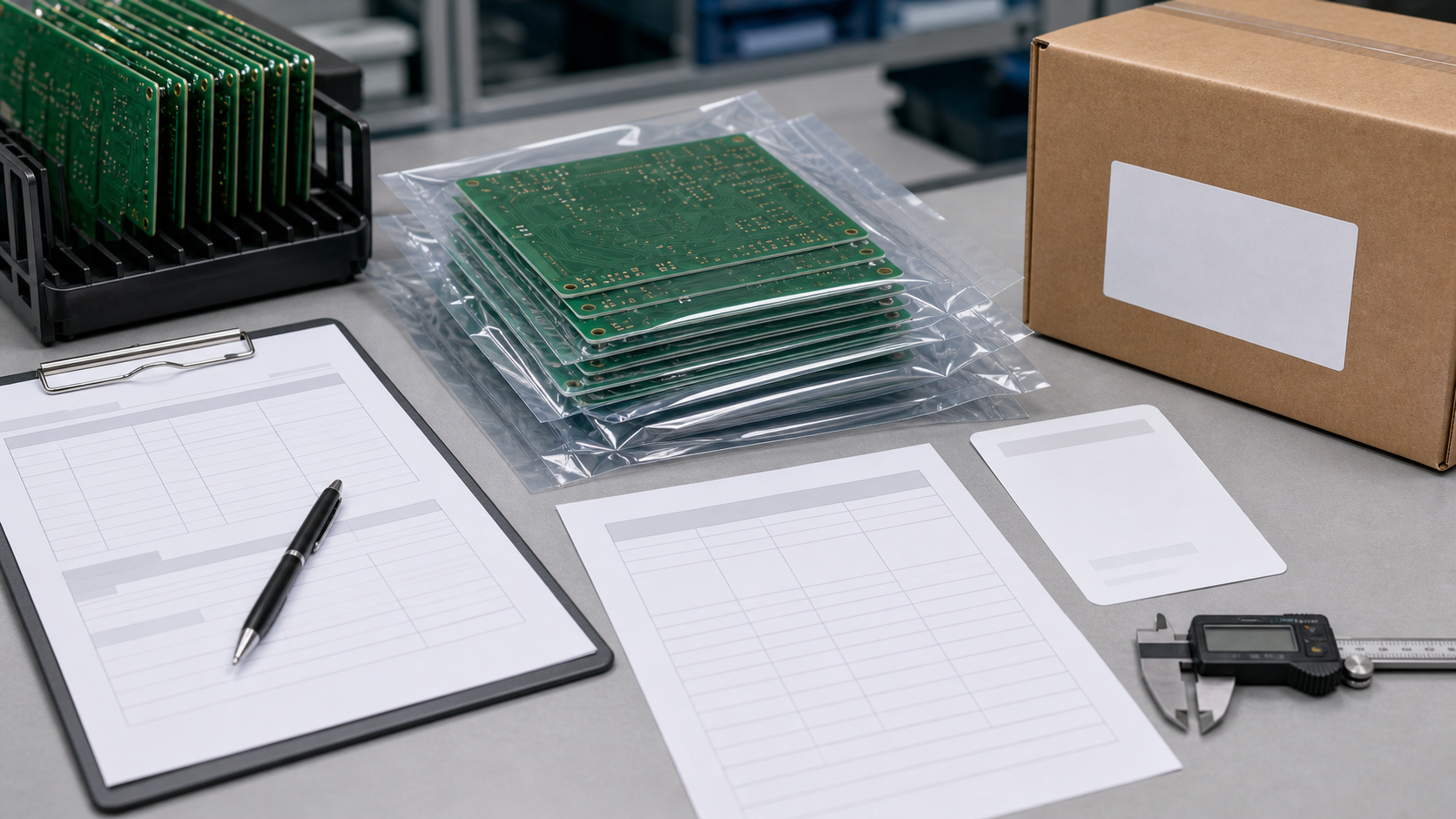
Quick Answer: Common PCB and Related Product HS Code Starting Points
The fastest way to avoid misclassification is to separate bare printed circuits from assembled electronics and related components before choosing a code.
| Related Product | Common HS Heading or Starting Point | When This Starting Point May Apply | When It May Not Apply | Broker Verification Note |
|---|---|---|---|---|
| Bare rigid PCB / printed circuit board | 8534 | Unpopulated printed circuits with conductive patterns and no mounted parts | PCBA, modules, controllers, power supplies, or finished devices | Usually the first heading to check for bare boards; confirm local subheading. |
| Bare flexible PCB / FPCB | 8534 | Flexible printed circuits without components | Camera flex assemblies, sensor flex assemblies, LED flex strips with components | Some national tariffs split flexible printed circuits into more specific statistical codes. |
| Bare metal-core PCB / aluminum PCB | 8534 | Unpopulated thermal printed circuit substrates | LED boards with LEDs, drivers, connectors, or optical parts already mounted | Describe as bare MCPCB if no components are assembled. |
| PCBA / populated circuit board | Function-based; often not 8534 | Assembled boards with ICs, resistors, capacitors, connectors, relays, LEDs, sensors, or firmware | Bare printed circuits | Classify by what the assembly does or what equipment it belongs to. |
| Integrated circuits / chips shipped separately | 8542 | ICs, microcontrollers, memory chips, processors, or similar semiconductor devices | ICs already mounted on a PCBA unless classified as part of the assembly | Do not use a PCB code for loose semiconductor components. |
| Electrical connectors shipped separately | 8536 | Plugs, sockets, terminal blocks, switches, and connectors for electrical circuits | Connectors already installed as part of a PCBA or finished device | Connector voltage, type, and use may matter for the final subheading. |
| Cable assembly / wire harness | 8544 | Insulated wire, cable, harnesses, and cable assemblies | Printed circuits, PCBA, or complete electronic devices | Mixed PCB and cable shipments may need separate invoice line items. |
| Power supply board / converter assembly | 8504 or function-based | Assemblies whose main function is electrical conversion, rectification, inversion, or power supply | Bare PCB substrates for power electronics before assembly | Voltage, current, enclosure status, and complete function should be documented. |
| Control panel / control apparatus | 8537 or function-based | Boards or panels equipped for electrical control or distribution | Bare PCB or partial assemblies that do not constitute control apparatus | Clarify whether the item is only a replacement board or a complete control unit. |
| Communication module PCBA | 8517 or function-based | Wi-Fi, Bluetooth, RF, router, gateway, or telecom-related modules when classified by communication function | Bare carrier boards or generic PCBA without communication function | Wireless capability, antenna, chips, and compliance documents may be requested. |
| LED lighting board or LED module | 9405, 8539, or function-based | Lighting modules, lamp parts, or LED assemblies depending on the product form and destination tariff | Bare aluminum PCB with no LEDs mounted | Do not describe an LED-mounted assembly as only a bare PCB. |
| Parts for switches, panels, or electrical apparatus | 8538 or function-based | Parts suitable for use with certain electrical switching/control apparatus | Complete devices, bare printed circuits, or PCBA classified by function | Use only when the part relationship is supportable with product documentation. |
| Computer motherboard or ADP machine part | 8473 or function-based | Parts and accessories of automatic data processing machines in supported cases | Generic bare PCBs or non-computer electronic assemblies | End-use and host equipment determine whether this direction is relevant. |
These headings are starting points, not final legal determinations. The final HS, HTS, CN, or TARIC code depends on the import country, product condition, technical function, and official customs interpretation.
Why Users Search This: Bare PCB Is Easy, PCBA Is the Problem
Most users searching “pcb boards hs code” want a clear answer for customs documents, not a long theory of tariff classification.
Procurement teams usually want to know what to put on the invoice. Importers want to avoid duty mistakes and customs delays. Hardware designers want to know whether board material or mounted components change the code. Production engineers need the shipping description to match the real build status: bare board, partially assembled board, fully tested PCBA, or functional electronic module.
Bare PCB Boards: When 8534 Is the Right Starting Point
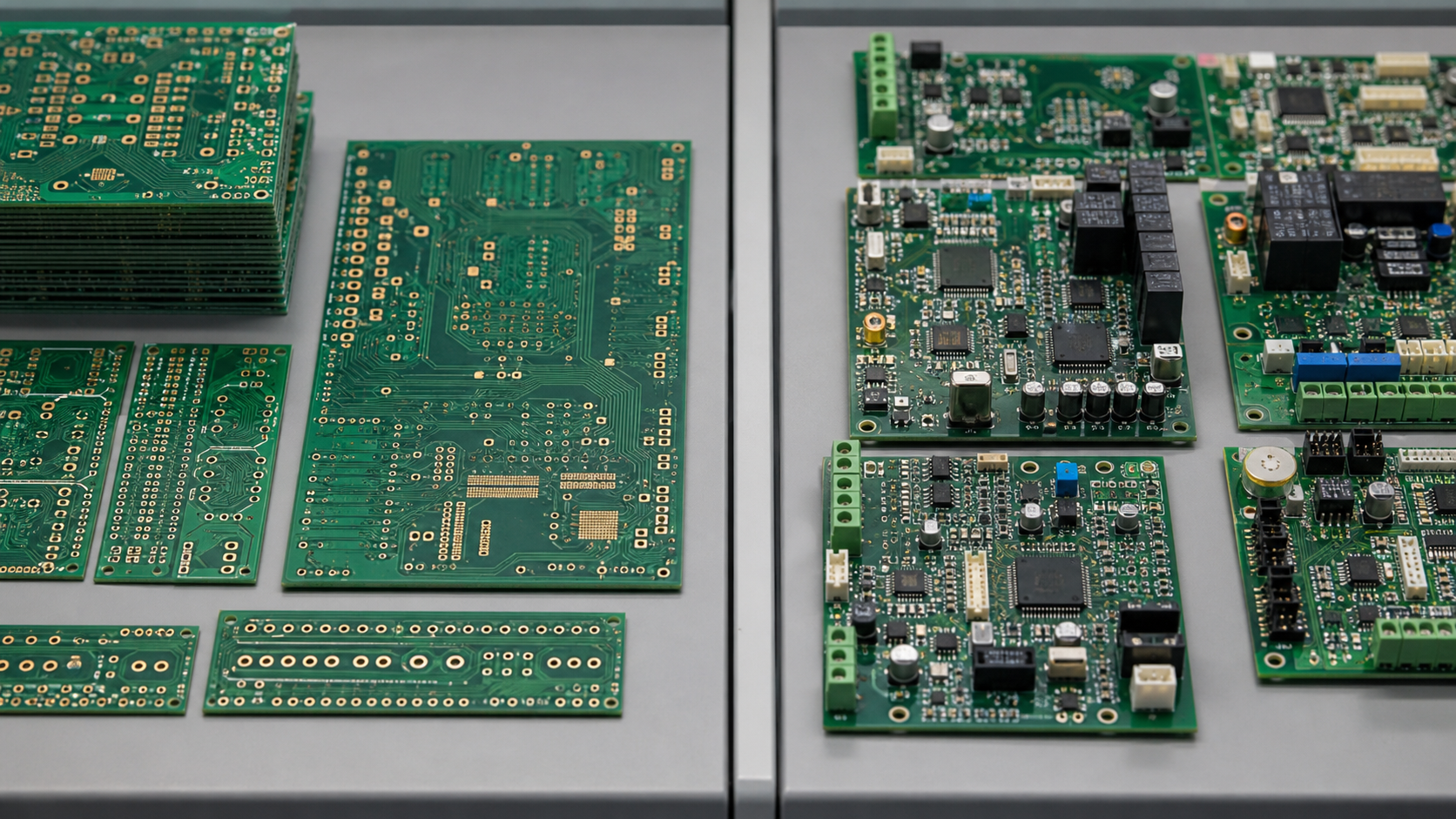
HS heading 8534 is the common starting point when the shipment is truly a bare printed circuit.
This usually includes unpopulated rigid PCB, flexible PCB, rigid-flex PCB, HDI PCB, multilayer FR-4 PCB, ceramic printed circuit substrate, metal-core PCB, and panelized PCB arrays when they contain printed conductive circuits but no mounted active or passive elements. Surface finish, solder mask, silkscreen, plated holes, and routing do not normally make a bare PCB into a PCBA.
- Good invoice wording: “Bare 4-layer FR-4 printed circuit board, no components mounted.”
- Good invoice wording: “Bare flexible printed circuit, polyimide substrate, unassembled.”
- Risky wording: “PCB board” without saying whether it is bare or populated.
- Risky wording: “Electronic board” when the shipment is actually a functional PCBA.
PCBA: Why One Board Can Move Away From 8534
A PCBA may look like a PCB, but customs often sees it as an assembled electronic part with a function.
Once ICs, resistors, capacitors, connectors, transformers, relays, LEDs, sensors, antennas, or firmware-loaded modules are installed, the board is no longer only a printed circuit. The correct classification may depend on whether it is a power converter, control unit, communication module, computer part, lighting module, instrument part, appliance part, or replacement board for a specific machine.
| PCBA Type | Buyer Question | Useful Documentation | Classification Direction |
|---|---|---|---|
| Motor control PCBA | Is it only a replacement board or a complete control apparatus? | BOM, schematic, host machine, control function | Function or control-apparatus review |
| Power supply PCBA | Does it convert or regulate power as its main function? | Input/output voltage, current, topology, enclosure status | Power conversion review |
| Wireless module PCBA | Does it transmit or receive communication signals? | Chipset, antenna, RF function, application | Communication-function review |
| LED PCBA | Is it a bare metal-core PCB, LED light engine, or lighting part? | LED count, driver parts, thermal substrate, end product | Lighting-function review |
What Procurement and Supply Chain Teams Should Put on the Invoice
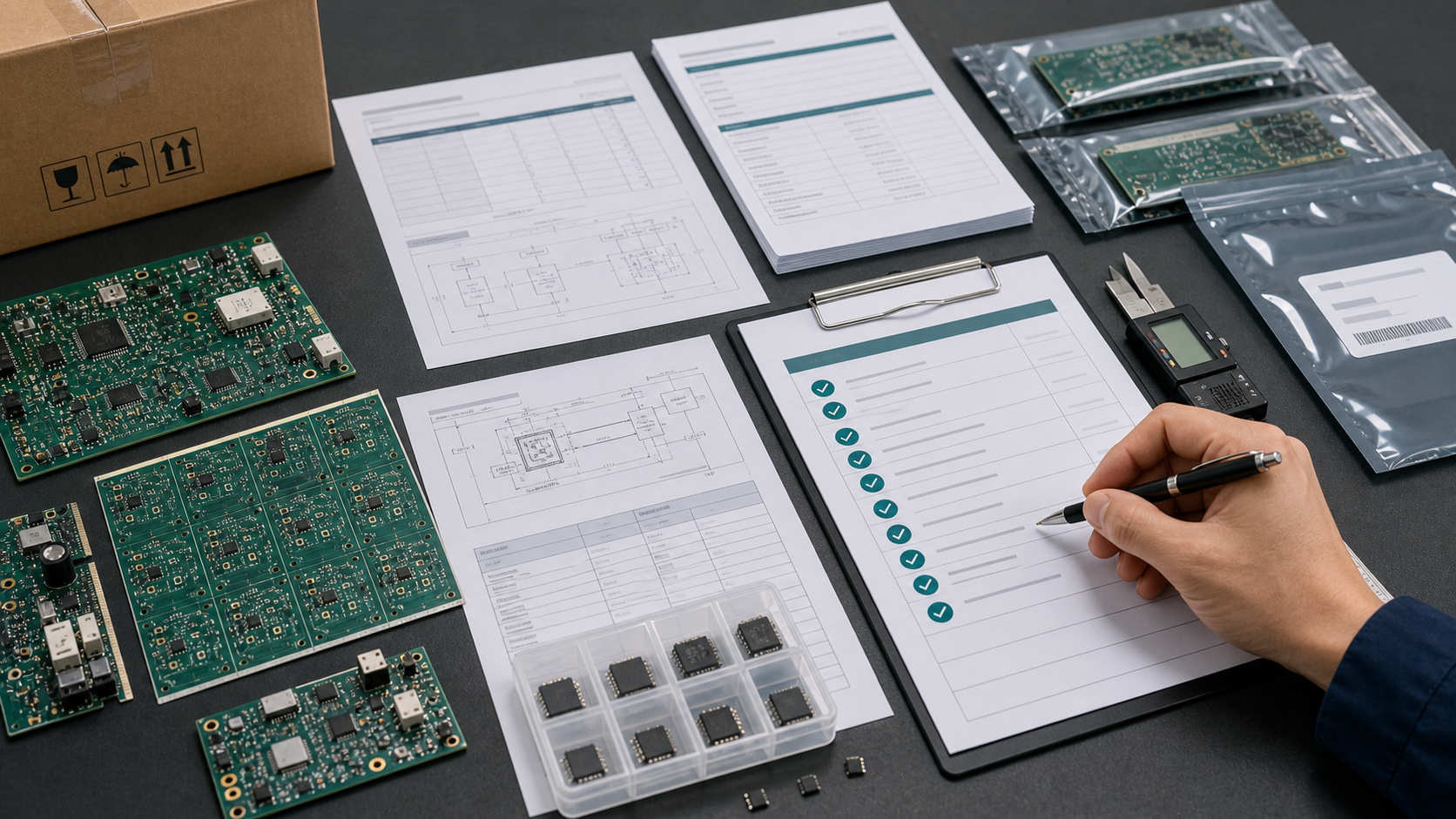
The invoice should describe the product accurately enough for a broker to classify it without guessing.
| Weak Description | Better Description | Why It Helps |
|---|---|---|
| PCB board | Bare 2-layer FR-4 printed circuit board, no components mounted | Shows it is likely a printed circuit, not a PCBA. |
| LED PCB | Aluminum PCB assembled with LEDs and connector for lighting module | Separates LED assembly from bare metal-core PCB. |
| Control PCB | Assembled control PCBA for motor-drive equipment | Identifies function and host equipment for classification review. |
| PCB sample | Bare prototype printed circuit board sample for engineering validation | Clarifies that sample status does not replace product identity. |
Role-Based Pain Points Buyers Actually Care About
A useful PCB HS code article must answer different users in different ways.
- Production engineers need the shipping description to match the actual build state: bare PCB, SMT-loaded PCBA, final-tested assembly, or module.
- Hardware designers need to know whether material, layer count, flex structure, or mounted components affect documentation.
- Procurement and supply chain teams need invoice wording, code starting points, duty-risk notes, and separate line items for mixed shipments.
- Technical researchers need the classification logic, official source direction, and clear difference between heading, subheading, and national tariff code.
- Importers and customs teams need BOM, product photos, end use, host equipment, and broker-verifiable descriptions.
Documents to Prepare Before Shipping PCB Boards
Good documents make the code decision faster and reduce customs questions.
- Commercial invoice with exact board type and assembly status.
- Packing list with model number, quantity, unit value, weight, and cartons.
- PCB drawing, Gerber summary, or product data sheet for bare boards.
- BOM summary, photos, functional description, and end-use for PCBAs.
- Host equipment model and part function for replacement electronic boards.
- Importer or broker confirmation for HS/HTS/CN/TARIC code before shipment.
Official Sources to Check Before Final Classification
Use official tariff schedules and customs rulings for final decisions, especially when duties, compliance, or penalties matter.
- For US imports, start with the USITC Harmonized Tariff Schedule and search heading 8534 for printed circuits.
- Search CBP CROSS rulings using terms such as “printed circuit board,” “printed circuit assembly,” “control board,” and the product function.
- For EU imports, verify the CN/TARIC code through official EU or national customs tools.
- For other markets, confirm the national tariff schedule because country-specific digits and duties may differ after the six-digit HS level.
FAQ About PCB Boards HS Code
What is the HS code for PCB boards?
Bare PCB boards are commonly reviewed under HS heading 8534 for printed circuits. The final national subheading depends on the import country and exact product description.
Is PCBA the same HS code as bare PCB?
No, not automatically. PCBA classification often depends on the function of the assembled board or the equipment it belongs to.
What HS code should I check for PCB connectors?
Electrical connectors shipped separately are often reviewed from heading 8536. If the connectors are mounted on a PCBA, the assembly may be classified by function instead.
What HS code should I check for IC chips?
Integrated circuits shipped separately are commonly reviewed from heading 8542. ICs already mounted on a PCBA are part of the assembly classification review.
What HS code should I check for cable assemblies shipped with PCBs?
Insulated wire, cable, and cable assemblies are often reviewed from heading 8544. Mixed shipments may require separate invoice line items.
Can a control board be classified under 8537?
Sometimes, if the item is equipped for electrical control or distribution. A bare PCB or partial replacement board may require a different review.
Can a power supply board be classified under 8504?
Sometimes, when the assembly’s main function is power conversion, rectification, inversion, or regulation. Technical details such as voltage and current matter.
Can an LED PCB use bare PCB code?
A bare aluminum PCB may start from 8534. An LED-mounted board or light engine may require lighting-related or function-based classification.
Does board material change the HS code?
Material helps describe the product, but bare FR-4, polyimide, aluminum, or ceramic printed circuits are commonly reviewed first as printed circuits when no components are mounted.
Does a prototype sample use a different HS code?
Sample status does not automatically change the classification. The product should still be described by its real condition and use.
Who is responsible for final customs classification?
The importer of record is generally responsible for final import classification. Suppliers should provide accurate technical descriptions and documents.
What is the safest way to avoid PCB HS code mistakes?
Separate bare PCBs, PCBAs, components, cables, and finished modules into clear line items, then ask the importer or broker to confirm the final code.
Final Takeaway
For bare PCB boards, HS 8534 is the common starting point. For PCBA and related electronics, the more useful answer is a code map: check nearby headings such as 8542 for ICs, 8536 for connectors, 8544 for cables, 8504 for power conversion, 8537 for control apparatus, 8517 for communication modules, and function-based headings for finished assemblies.
If you’re sourcing reliable PCB/PCBA manufacturing, including OEM, ODM, prototyping, mass production, or custom engineering solutions, reach out to our engineering team for technical support and a quote at [email protected].
0 Comments