




A printed circuit board may pass electrical testing before shipment, but that does not always mean it will remain reliable after years of use. In many electronic products, PCB problems do not appear immediately. They often show up after months or years of exposure to heat, humidity, vibration, current load, or repeated power cycling.
For manufacturers, engineers, and product developers, PCB durability is not just a technical detail. It affects product lifespan, field failure rate, maintenance cost, customer satisfaction, and even brand reputation. A small design or manufacturing issue on the PCB can become a major reliability problem once the product is operating in the real world.
So, what affects PCB durability over time? The answer is rarely one single factor. Long-term PCB reliability depends on material selection, copper thickness, thermal stress, moisture protection, surface finish, solder joint quality, PCB layout, manufacturing process control, and the actual operating environment.

What Does PCB Durability Mean?
PCB durability refers to the ability of a printed circuit board to maintain stable electrical performance, mechanical strength, insulation resistance, solder joint integrity, and environmental resistance during long-term operation.
A durable PCB should not only work correctly during initial testing. It should also remain stable when exposed to temperature changes, humidity, mechanical stress, chemical contamination, and continuous electrical load. This is especially important for products that are expected to operate for years without frequent maintenance.
In practical terms, PCB durability includes several aspects:
- Stable electrical conductivity and insulation performance
- Good resistance to heat and temperature cycling
- Reliable solder joints under long-term stress
- Resistance to moisture, oxidation, and corrosion
- Mechanical strength against bending, vibration, and impact
- Consistent performance in the final application environment
This is why PCB durability should be considered early in the design and manufacturing stage, not only after a product fails in the field.
Why PCB Durability Matters in Real Products
In many electronic products, the PCB is the platform that connects power, signals, components, sensors, connectors, and control circuits. If the PCB fails, the entire product may stop working even if the components themselves are still functional.
Poor PCB durability can lead to issues such as intermittent failures, unstable power output, communication errors, overheating, corrosion, solder joint cracking, delamination, or complete circuit failure. These problems are often difficult to diagnose because they may not occur during short production tests.
For example, a control board may work perfectly during factory inspection but fail after long-term operation inside a humid appliance, an outdoor enclosure, an industrial cabinet, or a high-temperature power supply. In these cases, the real cause may be related to material selection, moisture protection, heat dissipation, or process control.
For B2B customers, PCB durability is directly connected with product reliability and business risk. A durable PCB helps reduce repair costs, warranty claims, replacement cycles, and customer complaints.
Key Factors That Affect PCB Durability Over Time
1. PCB Material Selection
The base material is one of the first factors that affects PCB durability. Standard FR-4 is widely used and suitable for many electronic products, but not all FR-4 materials perform the same under long-term stress.
For products exposed to high temperature, humidity, high power, or continuous operation, the material should be selected carefully. Important material properties include glass transition temperature, thermal expansion, moisture absorption, dielectric performance, mechanical strength, and long-term thermal stability.
High Tg FR-4 may be a better choice for applications with higher operating temperatures. For high-frequency products, low-loss materials may be needed to maintain signal performance. For LED lighting, power electronics, and high-current applications, aluminum PCBs, copper base PCBs, or heavy copper PCBs may provide better thermal performance.
Choosing PCB material only based on price can create reliability risks later. The right material should match the product’s operating temperature, electrical load, service life, and environmental conditions.
2. Copper Thickness and Current Carrying Capacity
Copper thickness has a direct impact on current carrying capacity and heat generation. If the copper traces are too thin or too narrow for the required current, the PCB may suffer from excessive temperature rise, voltage drop, and local overheating.
Over time, local overheating can accelerate material aging, weaken solder joints, damage solder mask, increase copper peeling risk, and reduce the life of nearby components. This is especially important in power supplies, motor controllers, battery management systems, LED drivers, industrial control boards, and automotive electronics.
For low-current signal boards, standard copper thickness may be enough. However, high-current designs may require thicker copper such as 2 oz, 3 oz, or heavy copper structures. The correct choice depends on current load, allowable temperature rise, trace width, board structure, and heat dissipation conditions.
3. Thermal Stress and Temperature Cycling
Thermal stress is one of the most common causes of long-term PCB reliability problems. During operation, components such as MOSFETs, voltage regulators, rectifiers, relays, inductors, processors, and power resistors generate heat. When the product is turned off, the board cools down again.
This repeated heating and cooling creates expansion and contraction in the PCB materials, copper, solder joints, vias, and component packages. Because these materials do not expand at exactly the same rate, stress builds up over time.
Long-term thermal cycling may lead to solder joint fatigue, via cracking, pad lifting, copper delamination, board warpage, or component connection failure. In automotive electronics, industrial equipment, smart appliances, power modules, and outdoor devices, temperature cycling can be a major factor affecting PCB durability.
Good PCB thermal design can reduce these risks. This may include wider copper areas, thermal vias, proper heat source placement, thicker copper, suitable substrate materials, and better cooperation between PCB design and mechanical heat dissipation.
4. Humidity, Moisture, and Condensation
Moisture is another major factor that affects PCB durability over time. A PCB may work well in a dry laboratory but behave differently in a humid warehouse, kitchen appliance, refrigeration system, outdoor sensor, agricultural device, or marine environment.
Humidity can reduce insulation resistance, increase leakage current, accelerate copper oxidation, cause corrosion, and raise the risk of electrochemical migration. Condensation is even more dangerous because water can form directly on the board surface, especially when the product experiences rapid temperature changes.
To improve moisture resistance, engineers may need to consider low moisture absorption materials, suitable surface finish, good solder mask quality, larger creepage and clearance distances, conformal coating, potting, or sealed enclosures.
Manufacturing cleanliness also matters. Ionic contamination left on the PCB assembly can become a hidden reliability risk in humid environments.
5. Surface Finish and Oxidation Resistance
Surface finish protects exposed copper and helps ensure solderability during assembly. It also affects storage life, contact reliability, solder joint quality, and oxidation resistance.
Common PCB surface finishes include HASL, lead-free HASL, ENIG, OSP, immersion silver, immersion tin, and hard gold. Each finish has its own advantages and limitations.
For example, HASL is cost-effective for many general applications. ENIG provides a flat surface and is often used for fine-pitch components, BGA packages, and higher reliability products. OSP is economical and flat, but it requires good storage and assembly control. Hard gold is commonly used for gold fingers or connectors that need repeated insertion.
If the surface finish is not suitable for the application, the PCB may experience poor solderability, pad oxidation, weak solder joints, increased contact resistance, or reduced storage life.
6. Solder Joint Quality
For PCB assemblies, solder joints are often the weakest points under long-term stress. A solder joint may pass initial inspection but still fail later due to thermal cycling, vibration, mechanical loading, or poor wetting.
Common solder joint issues include cold solder joints, insufficient solder, solder voids, cracks, bridging, poor wetting, pad lifting, and hidden BGA defects. These problems may cause intermittent faults that are difficult to reproduce during normal testing.
Solder joint reliability depends on PCB surface finish, pad design, stencil design, solder paste quality, reflow profile, component condition, process control, and inspection methods.
For high-reliability products, inspection methods such as AOI, X-ray inspection, ICT, functional testing, and aging tests can help reduce the risk of solder-related failures.
7. PCB Layout and Component Placement
PCB layout affects more than signal routing. It also affects heat distribution, current paths, mechanical strength, EMI performance, and long-term durability.
If high-power components are placed too close together, the board may develop a hot spot. If high-current traces are too narrow, the copper may overheat. If heat-sensitive components are placed near MOSFETs, rectifiers, inductors, or power resistors, their life may be shortened.
Layout problems that may reduce PCB durability include poor heat source distribution, insufficient copper area, inadequate via design, narrow power traces, weak connector pads, poor clearance between high-voltage areas, and sensitive signals routed near noise sources.
A reliable PCB layout should consider electrical performance, heat flow, mechanical stress, assembly process, and the final installation environment at the same time.
8. Mechanical Stress and Vibration
Mechanical stress is often underestimated. In real products, PCBs may be affected by screws, enclosures, connectors, cable pulling, vibration, shock, bending, or transportation impact.
Applications such as automotive electronics, industrial machines, robots, power tools, drones, large home appliances, and outdoor equipment often require stronger mechanical reliability.
Poor mechanical design may cause board cracking, solder joint fatigue, BGA failure, connector pad lifting, via cracks, or component loosening. To reduce these risks, designers may need to optimize mounting holes, avoid routing critical traces near screw holes, increase board thickness, reinforce heavy components, improve connector fixation, and control PCB warpage.
9. Chemical Exposure and Corrosion
PCBs can also be affected by chemical exposure. Flux residue, cleaning agent residue, salt mist, sulfur-containing gases, oil, dust, and industrial pollutants can gradually reduce board reliability.
Corrosion may attack copper, solder joints, component leads, connectors, and exposed metal surfaces. In humid conditions, contamination can also reduce surface insulation resistance and increase the possibility of leakage current or electrochemical migration.
This is a common concern in outdoor electronics, industrial equipment, marine applications, agricultural devices, kitchen appliances, and energy systems. In these cases, conformal coating, potting, better enclosure design, corrosion-resistant connectors, and proper cleaning control may be necessary.
10. Manufacturing Process Control
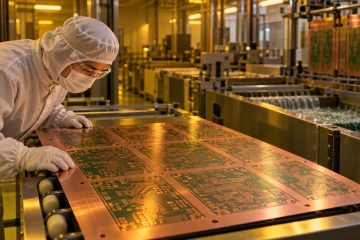
Even with a good design and suitable materials, PCB durability can still be affected by manufacturing quality. PCB fabrication involves drilling, copper plating, imaging, etching, solder mask, surface finish, routing, electrical testing, inspection, and packaging. Each step matters.
Process problems such as insufficient hole copper thickness, over-etching, poor solder mask adhesion, weak lamination, unstable surface finish, contamination, or improper storage can create hidden reliability risks.
For long-life products, it is important to work with a PCB manufacturer that can provide stable process control, engineering review, material support, reliable inspection, and consistent production quality.
How Different Applications Affect PCB Lifespan
PCB lifespan depends heavily on where and how the product is used. The same PCB that works reliably in a small indoor device may not survive long in an outdoor power system or a high-vibration industrial machine.
| Application | Common Durability Challenges |
|---|---|
| Consumer Electronics | Compact design, cost pressure, drop impact, high-density routing |
| Smart Home Devices | Continuous operation, humidity changes, wireless stability |
| Industrial Control | Heat, vibration, EMI, long service life |
| Automotive Electronics | Temperature cycling, vibration, humidity, high reliability requirements |
| LED Lighting | Long-term heat generation, thermal management, material aging |
| Power Electronics | High current, high voltage, heat rise, insulation distance |
| Outdoor Equipment | Rain, condensation, UV exposure, salt mist, corrosion |
| Medical Devices | Stable operation, cleanliness, safety, process consistency |
Because of these differences, PCB durability should always be evaluated based on the final application. There is no universal PCB structure that fits every product. Material, copper thickness, surface finish, protection method, and testing plan should all match the real operating conditions.
Common Signs of PCB Aging or Reliability Problems
PCB aging does not always cause immediate failure. In many cases, the product first becomes unstable. These early signs should not be ignored.
- The product fails only after running for a period of time
- Failure becomes more obvious at high temperature
- The device sometimes cannot start properly
- Power output becomes unstable
- Communication signals become intermittent
- LED brightness changes or flickers
- Connectors become unreliable
- The PCB surface becomes yellow, dark, or burned
- Solder joints show cracks or dull surfaces
- There are signs of corrosion, oxidation, or moisture damage
- The board shows warpage, bubbling, or delamination
When these symptoms appear, the root cause may not be a single component. The problem may come from PCB material, heat stress, solder quality, moisture exposure, layout design, or manufacturing defects.
How to Improve PCB Durability in Your Project
Improving PCB durability starts before production. The earlier reliability requirements are considered, the easier it is to avoid expensive redesigns and field failures.
Define the Real Operating Environment
Before choosing PCB materials and processes, clarify the actual working conditions. Will the product operate indoors or outdoors? Will it face high humidity, vibration, high current, high temperature, or continuous 24/7 operation? Will it be exposed to condensation, dust, salt mist, or chemicals?
These answers help determine the right PCB structure and protection method.
Choose Materials Based on Reliability, Not Only Cost
Cost is always important, but the cheapest material may not be the most economical choice if it increases field failure risk. For demanding products, High Tg materials, thicker copper, better surface finishes, or special substrates may provide better long-term value.
Control Heat from the Design Stage
Heat should not be treated as an afterthought. Designers should identify major heat sources, calculate current paths, increase copper area where needed, use thermal vias, separate heat-sensitive components, and consider the final enclosure and airflow.
Protect the PCB from Moisture and Corrosion
If the product will be used in humid or corrosive environments, moisture protection should be planned early. Options may include conformal coating, potting, sealed housing, better surface finish, increased spacing, and stricter PCBA cleanliness control.
Work with a Manufacturer That Provides Engineering Review
A good PCB manufacturer does more than produce boards from Gerber files. For reliability-focused projects, engineering review can help identify potential risks such as insufficient copper width, unsuitable surface finish, weak via design, tight spacing, material mismatch, or process limitations.
How a PCB Manufacturer Helps Improve Long-Term Durability
The right PCB manufacturing partner can play an important role in improving product durability. This is especially true for industrial, automotive, medical, smart home, power, and outdoor electronics projects.
A reliable PCB manufacturer can support your project in several ways:
- Reviewing PCB design files before production
- Recommending suitable materials for the application
- Supporting thicker copper and high-current PCB requirements
- Providing stable surface finish options
- Controlling hole copper thickness and plating quality
- Improving solder mask quality and moisture resistance
- Supporting conformal coating or PCBA protection if required
- Performing electrical testing, AOI, X-ray, functional testing, or aging tests
- Maintaining consistent quality from prototype to mass production
For long-term products, it is better to discuss reliability expectations before production begins. Sharing details such as operating temperature, current load, environment, expected product life, and application type allows the PCB manufacturer to provide more practical recommendations.
FAQ About PCB Durability
How long can a PCB last?
PCB lifespan depends on material, design, operating environment, manufacturing quality, assembly process, and electrical load. In a stable indoor environment, a well-made PCB may operate for many years. In harsh environments with heat, humidity, vibration, or corrosion, the lifespan can be much shorter if the board is not designed properly.
What is the most common cause of PCB failure over time?
Common causes include thermal stress, moisture, corrosion, solder joint fatigue, insufficient copper thickness, poor material selection, and manufacturing defects. In many real cases, PCB failure is caused by a combination of factors rather than one single issue.
Does thicker copper improve PCB durability?
Thicker copper can improve current carrying capacity and reduce temperature rise in high-current circuits. However, it does not solve every durability problem. Material selection, layout, heat dissipation, solder quality, and environmental protection are also important.
Can conformal coating improve PCB durability?
Yes, conformal coating can help protect PCB assemblies from moisture, dust, corrosion, and some chemical contaminants. It is commonly used in humid, outdoor, industrial, and automotive environments. However, coating material and process quality must be selected carefully.
Why do PCBs fail after working normally for months?
Some PCB reliability problems develop slowly. Heat cycling, vibration, moisture, oxidation, and electrical stress can gradually weaken solder joints, vias, copper traces, or insulation performance. That is why long-term reliability should be considered during design and manufacturing.
Conclusion
PCB durability over time is affected by many factors, including material selection, copper thickness, thermal stress, humidity, surface finish, solder joint quality, PCB layout, mechanical stress, corrosion, and manufacturing process control.
For products that need long service life, stable operation, or harsh environment resistance, PCB durability should never be treated as an afterthought. The best results come from considering reliability early in the project, choosing suitable materials, optimizing the design, controlling the manufacturing process, and working with an experienced PCB supplier.
If your project requires reliable PCBs for industrial control, smart home devices, automotive electronics, medical equipment, power electronics, LED lighting, or outdoor applications, our engineering and manufacturing team can help review your PCB requirements and recommend suitable solutions. Email:[email protected]
0 Comments