




The cost to get a PCB made depends mainly on board size, layer count, material, copper weight, surface finish, quantity, lead time and whether the order is bare PCB only or includes assembly. A simple prototype board can be inexpensive, while a multilayer, impedance-controlled, heavy copper or rush-order PCB can cost much more because it needs more process control.
The useful way to ask this question is not “what is the cheapest PCB price,” but “what information does the factory need to quote the board correctly?” If your files or specifications are incomplete, the first quote may change after engineering review.
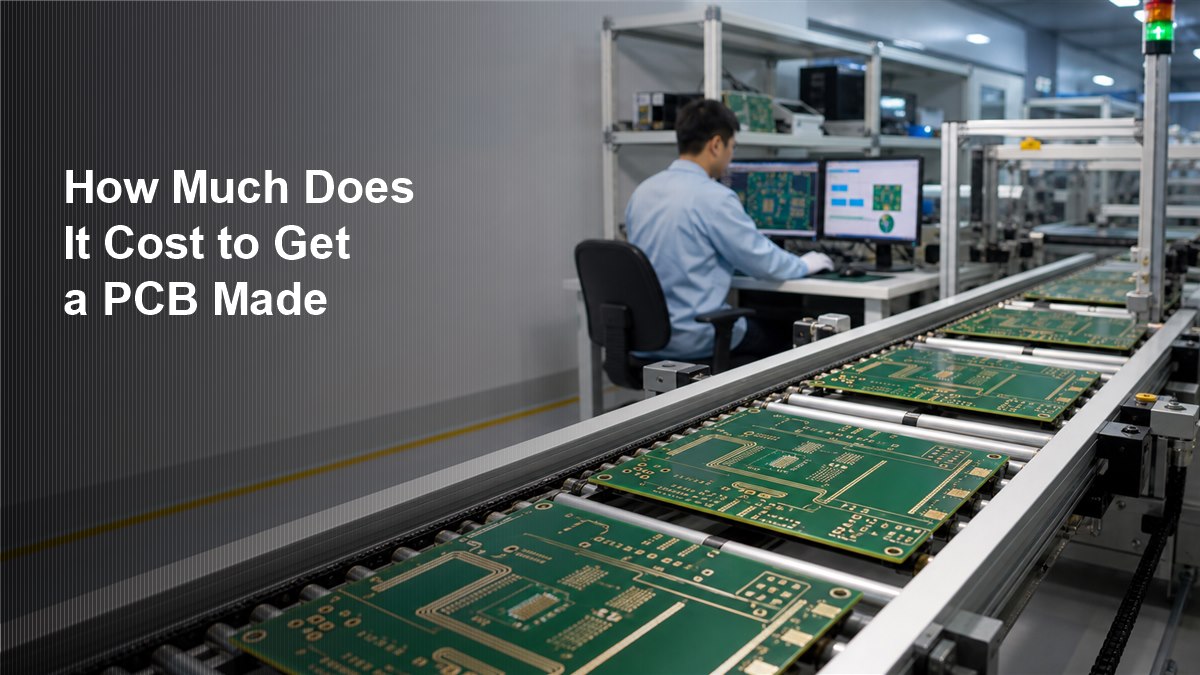
What the Cost to Get a PCB Made Really Includes
The cost includes more than copper and laminate. It also includes engineering review, tooling or setup, panel use, drilling, plating, solder mask, surface finish, electrical test, packing and delivery planning.
For a buyer, the important point is simple: the same board can be quoted differently if the quantity, lead time, copper weight, finish, tolerance or test requirement changes.
Main PCB Cost Drivers Buyers Should Check First
The fastest way to understand a PCB quote is to separate the cost drivers. Some drivers are fixed by the design, while others can be adjusted before production.
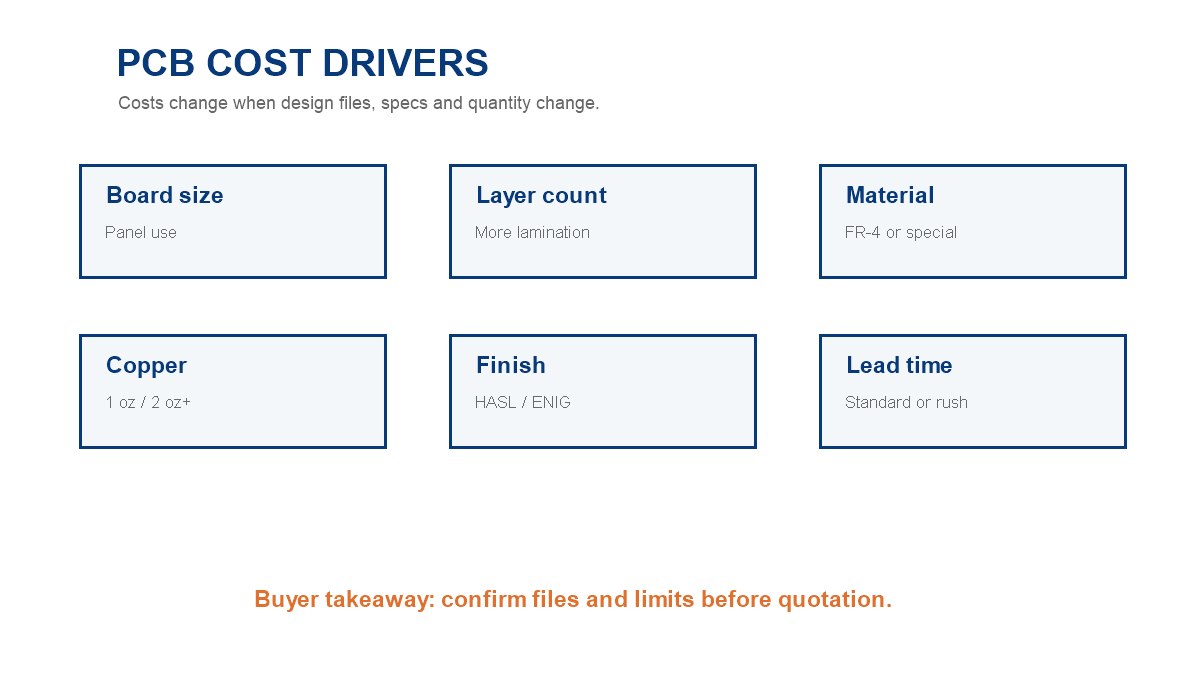
| Cost Driver | Why It Changes Price | Buyer Check |
| Board size | Larger boards use more panel area | Confirm outline and panel need |
| Layer count | More layers need more lamination and inspection | Do not add layers without routing need |
| Material | Special materials cost more than standard FR-4 | Match material to application |
| Copper weight | Heavy copper increases process difficulty | Use only where current or heat requires it |
| Lead time | Rush orders disturb normal production planning | Quote standard and urgent options separately |
How Board Size and Panel Use Affect Price
Board size affects cost because factories manufacture PCBs in panels. A board that wastes panel area may cost more per piece than a smaller board with better panel utilization.
If the outline can be adjusted without hurting the product, ask the supplier whether a small size change improves panel use. Do this before freezing the mechanical design.
How Layer Count Changes Manufacturing Cost
Layer count changes cost because multilayer PCBs need more material layers, lamination steps, drilling control and inspection. A 2-layer board is usually simpler than a 4-layer or 6-layer board.
Do not reduce layers only to chase a lower quote if the result creates poor routing, weak return paths or EMI problems. Use HDI PCB or multilayer design only when the routing density and signal needs justify it.
How Material Choice Affects PCB Cost
Material choice affects price because standard FR-4, high Tg FR-4, high frequency laminate, ceramic and metal-core materials have different costs and processing requirements.
For many ordinary boards, FR-4 substrate material is enough. For RF, heat, high voltage or harsh environments, the material discussion should happen before quotation.
How Copper Weight and Surface Finish Affect Cost
Copper weight and surface finish can change both price and manufacturability. Higher copper weight may require wider spacing, stronger etching control and extra review.
Surface finish also matters. HASL, ENIG, OSP and other finishes have different price, shelf-life and assembly implications. If the board has fine pitch parts or long storage time, the lowest finish cost may not be the best project cost.
How Quantity Changes Unit Cost
Quantity changes unit cost because setup and engineering review are spread across more boards. A very small prototype order carries more setup cost per board than a larger batch.
Step 1: Quote the true prototype quantity.
Step 2: Quote a pilot quantity for early production.
Step 3: Quote a volume quantity if the design is likely to scale.
This gives you a real cost curve instead of one isolated price.
What Files Are Needed for an Accurate PCB Quote
An accurate quote needs the same information the factory will use to build the board. Missing files create assumptions, and assumptions create quote changes.
- Gerber files or ODB++ package.
- NC drill files.
- Board outline and cutout information.
- Layer count and stackup requirement.
- Material, thickness and copper weight.
- Surface finish and solder mask color.
- Quantity and expected lead time.
- Testing or special inspection requirements.
Why the First PCB Quote Sometimes Changes
The first quote changes when engineering review finds missing specifications, manufacturing limits or mismatches between files and notes. This is not always a supplier problem; often the RFQ did not describe the board clearly enough.
Common reasons include unclear board thickness, unrealistic line spacing, missing stackup, special copper, controlled impedance, outdated Gerbers or a rush lead time that was not included at the start.
How to Reduce PCB Cost Without Hurting Quality
You can reduce PCB cost by removing unnecessary complexity, not by weakening the board. The best savings come from making the design easier to manufacture while keeping the required function.
Step 1: Use standard material when the application allows it.
Step 2: Avoid unnecessary layer count, tiny drills and tight spacing.
Step 3: Choose copper weight based on current and heat, not habit.
Step 4: Use a practical surface finish.
Step 5: Give the supplier complete files before asking for a final price.
PCB Prototype Cost vs Production Cost
Prototype cost and production cost should be judged differently. A prototype is mainly about speed, learning and design verification. Production is about repeatability, yield, unit cost and delivery stability.
| Order Type | Cost Focus | Buyer Decision |
| Prototype | Setup and quick learning | Do not over-optimize unit cost |
| Pilot run | Process confirmation | Check yield and DFM feedback |
| Production | Stable unit cost | Confirm panelization and test plan |
Questions to Ask Before Accepting a PCB Quote
A good PCB quote should make the manufacturing assumptions clear. If something is missing, ask before you approve the order.
- Which material and copper weight are included?
- Is electrical testing included?
- Is the quoted lead time standard or urgent?
- Does the quote include controlled impedance?
- Are special tolerances included?
- What file issue could change the price?
FAQs About PCB Manufacturing Cost
What is the cheapest way to get a PCB made?
Use standard FR-4, common thickness, normal copper, simple routing rules, practical quantity and standard lead time.
Why do PCB prices vary between suppliers?
They may assume different materials, test scope, lead time, panel use, yield risk or service level.
Does PCB thickness affect price?
Yes, especially when the thickness is nonstandard or tightly controlled. Review PCB thickness tolerance if the board must fit a mechanical interface.
Does heavy copper cost more?
Usually yes. Heavy copper can require stronger process control and should be specified only when current or thermal performance needs it.
Is ENIG more expensive than HASL?
Often yes, but it may be preferred for fine pitch, flatness and shelf-life requirements.
Can a supplier quote without Gerber files?
Only roughly. A final quote needs real manufacturing data, not just a board idea.
How can I compare two PCB quotes?
Compare material, thickness, copper weight, surface finish, test scope, lead time and file assumptions, not price alone.
Should I ask for DFM review before ordering?
Yes. DFM review can find issues that may change cost, yield or lead time before production starts.
What should I send for a PCB cost review?
Send Gerbers, drill files, stackup notes, material, copper, finish, quantity and lead-time target.
Send Files for a PCB Cost Review
If you want to know what it will cost to get your PCB made, send Gerber files, drill files, board specifications, quantity and lead-time target to [email protected]. PCBTRY can review the files, explain the main cost drivers and flag quote-changing risks before production.
0 Comments