




How do you waterproof a PCB?
Waterproofing a PCB starts by defining the actual exposure, then combining enclosure sealing, connector and cable-entry control, PCB layout choices, and an appropriate conformal coating or potting compound. A coating can reduce moisture and contamination risk, but it does not automatically make an assembled product safe for continuous immersion. The completed product must be tested in its real orientation, temperature range and operating state.
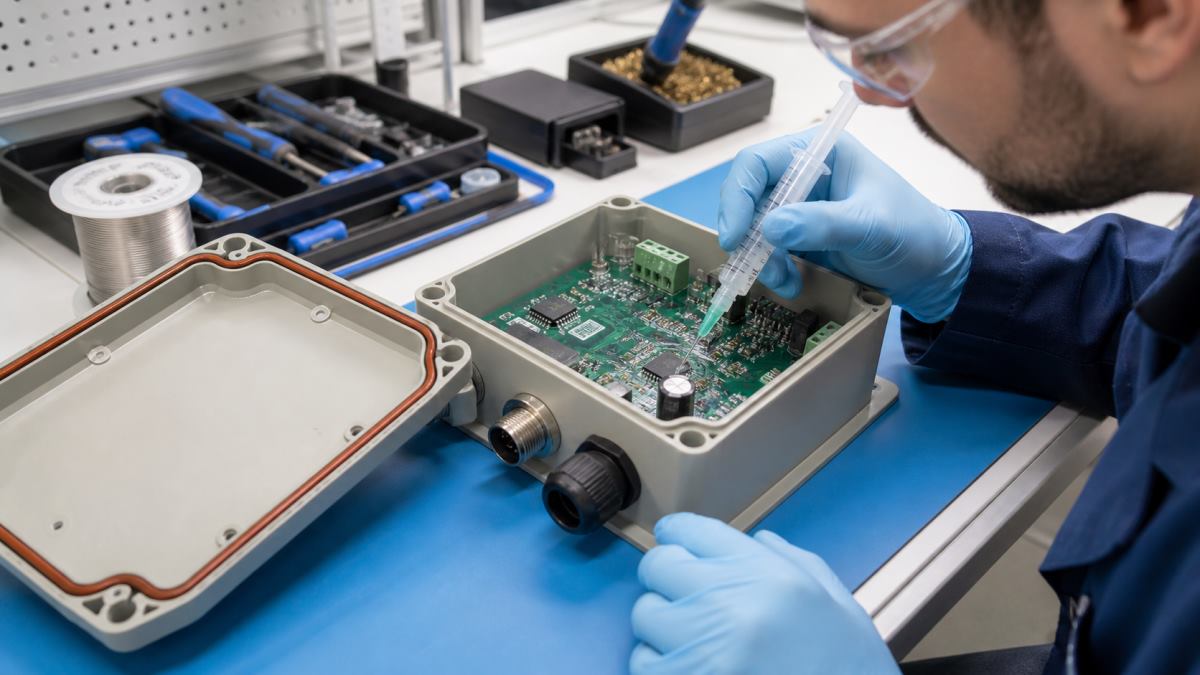
Define what “waterproof” means for the product
Separate humidity and condensation, occasional splashes, washdown, rain, temporary immersion and continuous immersion. Record temperature, pressure, chemicals, salt, vibration and service life. These conditions determine whether a coating is enough or whether the design needs a sealed enclosure, potting and pressure-resistant interfaces.
Do not confuse a coated PCB with an IP-rated product
Ingress-protection ratings apply to an enclosure tested as a complete product under defined conditions. A coated circuit board by itself does not receive an enclosure IP rating. Claims should name the tested assembly, procedure and result rather than using “IP67 PCB” as a shortcut.
Use enclosure sealing as the first barrier
Design gaskets, O-rings, seams, fasteners and mating surfaces so compression remains controlled over temperature and aging. Avoid water traps and place drainage or breathable membranes only where the exposure model supports them. Confirm that assembly tolerances cannot pinch or roll the gasket.
Control connectors, cables and pressure paths
Water often enters through connectors, cable glands, switches, vents or capillary paths along wire strands. Select rated interfaces, provide strain relief and define sealing around cable jackets and connector backs. Serviceable connectors need a protection plan that does not contaminate contacts.
Choose between conformal coating and potting
| Method | Best fit | Main advantage | Main limitation |
|---|---|---|---|
| Conformal coating | Humidity, condensation and contamination control | Thin, light and potentially repairable | Edges, shadows and connectors need careful control |
| Selective coating | Production assemblies with keepouts | Repeatable coverage around protected zones | Programming and process validation required |
| Potting/encapsulation | Severe moisture, vibration or tamper resistance | Thick environmental and mechanical barrier | Heat, stress, weight and repair difficulty |
| Sealed enclosure | Serviceable products and replaceable PCBs | Protects the whole assembly | Interfaces and pressure cycling remain weak points |
Select a coating by environment and service needs
Acrylic, silicone, polyurethane, epoxy and vapor-deposited coatings have different chemical resistance, temperature behavior, thickness, cure and repairability. Use the material supplier’s current technical data and qualification evidence. Confirm compatibility with plastics, labels, adhesives, flux residues and cleaning chemistry.
Design coating keepouts before production
Mark connectors, test points, switches, relays, sensors, heat sinks, grounding contacts, adjustment points and mechanical interfaces that must remain uncoated. Define keepout boundaries and allowed overspray on the assembly drawing. Temporary masking must survive the application and cure process without leaving contamination.
Clean and dry the assembly before protection
Coating over ionic residue, moisture, oil or uncured flux can trap the cause of corrosion under the protective layer. Validate the cleaning process for the flux and components used, then verify dryness before coating. Do not copy a universal bake temperature or time without checking component and material limits.
Apply coating with measurable process controls
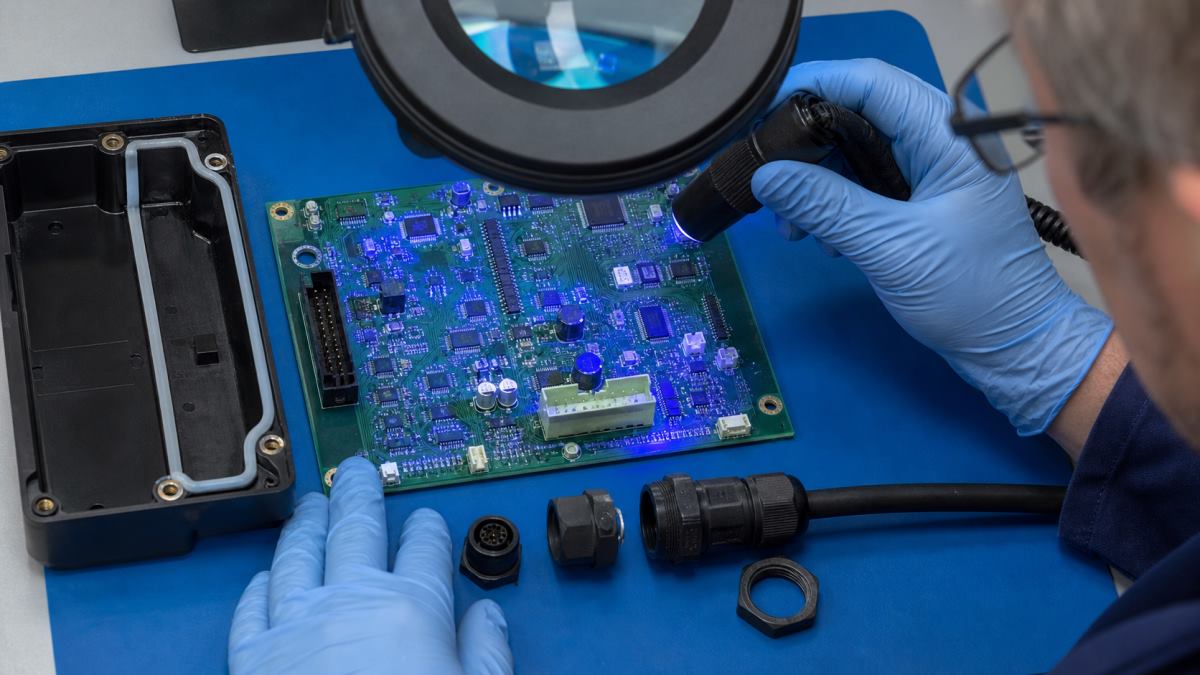
Control viscosity where applicable, spray or dispense settings, coverage, thickness, cure conditions and handling time. Inspect under suitable lighting or fluorescence when the material supports it. Corners, component shadow zones, sharp leads and board edges need particular attention.
Plan heat flow before using potting compound
Potting changes heat transfer and can place cure or thermal-expansion stress on components, solder joints and the PCB. Model or measure the highest-risk parts in the final enclosure. Verify fill depth, voiding, adhesion and cure exotherm with the actual compound and build geometry.
Protect bare-board features that start corrosion
Use appropriate surface finish, solder mask coverage, spacing and edge design for the environment. Keep exposed copper, cut edges and unsealed vias away from water paths when possible. Board fabrication choices support the protection system but do not replace assembly sealing.
Verify coverage without damaging keepouts
Inspect the full PCB from multiple angles and use magnification for fine-pitch areas. Check bubbles, cracks, thin areas, bridging into connectors and incomplete cure. Record the coating lot, process recipe, operator or machine program and inspection result for traceability.
Test the complete product against the exposure
| Risk | Useful verification | Evidence to record |
|---|---|---|
| Condensation | Temperature/humidity cycling with powered checks | Cycle profile, leakage/function and inspection |
| Splash or rain | Directional water exposure in installed orientation | Flow, duration, orientation and post-test function |
| Immersion | Defined depth, time and pressure condition | Leak result, electrical behavior and drying inspection |
| Chemicals/salt | Material-compatible contamination testing | Concentration, exposure and corrosion result |
| Production consistency | Coverage inspection and periodic validation | Lot traceability and acceptance criteria |
Design for inspection, repair and end of life
Decide whether field repair is required before choosing an irreversible encapsulant. Provide access to diagnostics and define approved stripping, cleaning and recoating methods. If repair is prohibited, document replacement and disposal expectations for the potted assembly.
Use this PCB waterproofing checklist
- Exposure type, duration, orientation and temperature are defined.
- Enclosure seams, connectors and cable entries have sealing controls.
- Coating or potting material matches environment and repair needs.
- Keepouts are documented on the assembly drawing.
- Cleaning and dryness are validated before application.
- Coverage, thickness and cure have measurable acceptance criteria.
- Thermal and mechanical effects are checked in the final enclosure.
- The complete powered product is tested against the real exposure.
PCB waterproofing FAQ
Can conformal coating make a PCB fully waterproof?
It can improve moisture resistance, but gaps, connectors and enclosure interfaces still govern whether the complete product survives immersion.
Is clear nail polish suitable for production electronics?
It lacks the controlled formulation, process evidence and long-term qualification normally required for production protection.
Can hot glue waterproof a circuit board?
Hot glue may provide local strain relief, but it is not a controlled substitute for a qualified coating, potting compound or sealed enclosure.
Should connectors be coated?
Electrical contact areas usually require keepouts or a connector-specific sealing method. Coating contacts can prevent reliable mating.
Does solder mask waterproof a PCB?
No. Solder mask protects selected copper surfaces but does not seal components, edges, vias, connectors or the enclosure.
Can a coated board be repaired?
Some coatings can be removed and reapplied with approved methods; potting and certain coatings make repair much harder.
How is coating coverage checked?
Use visual or fluorescent inspection where supported, magnification, thickness controls and documented coverage criteria.
What files should be sent to a PCB supplier?
Send fabrication data, BOM, placement data, assembly drawing, coating keepouts, material requirement and environmental test criteria.
Request PCB fabrication and protection review
For a moisture-resistant PCB or PCBA project, send the Gerber files, BOM, coating drawing, enclosure constraints and exposure test requirements through the PCBTRY contact page. Engineering review should confirm which requirements belong to fabrication, assembly, coating and final product validation.


0 Comments