




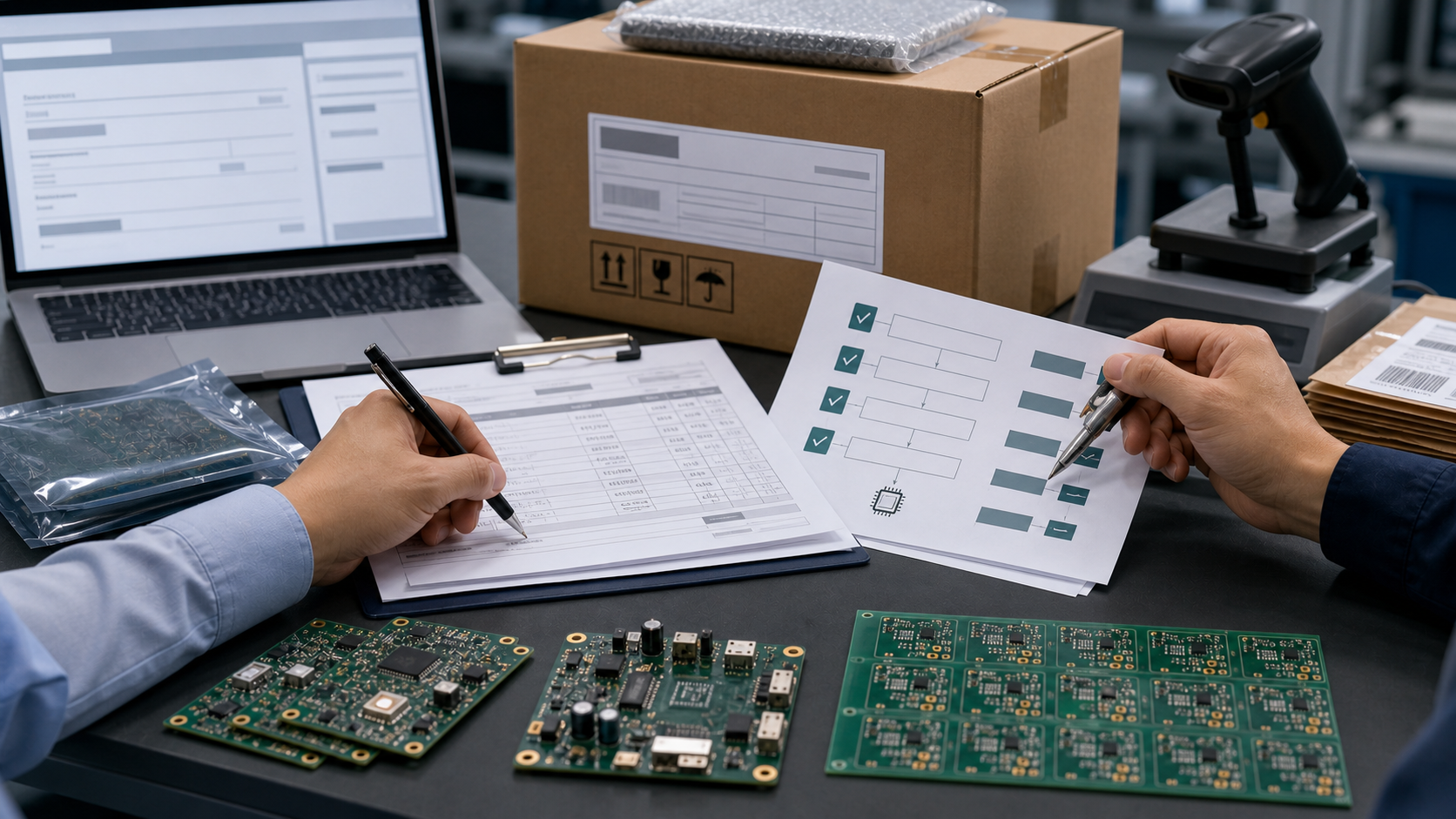
The circuit board HS code depends on what the product actually is: a bare printed circuit, an assembled PCBA, a control board, or a finished electronic module. Bare printed circuits are commonly reviewed under HS heading 8534, but populated circuit boards with components may need classification by function rather than by board material alone.
What Is a Circuit Board HS Code?
A circuit board HS code is a customs classification number used to identify printed circuit boards, circuit board assemblies, and electronic modules in international trade. The Harmonized System, or HS, provides the international foundation, while each country may add extra digits and local rules for duty, taxes, statistics, and import controls.
For buyers, the important point is that “circuit board” is not always one customs code. A bare PCB without mounted components is different from a PCBA with ICs, connectors, relays, sensors, or firmware. The more complete the assembly becomes, the more likely customs will ask what the board does, not only what it is made of.
Common HS Code for Bare Printed Circuit Boards
Bare printed circuit boards are commonly associated with HS heading 8534, which covers printed circuits. In the United States HTS, printed circuits appear under heading 8534, with more detailed national subheadings depending on the tariff schedule version and product details.
This heading is usually relevant when the product is a bare printed circuit: copper traces, pads, holes, vias, solder mask, surface finish, legend, and board outline, but no mounted electronic components that give the board an active function. Importers should still verify the final code in the destination country’s tariff database before shipment.
Why PCBA May Not Use the Same HS Code as Bare PCB
A PCBA may not use the same HS code as a bare PCB because mounted components can turn the board into a part, control unit, subassembly, or functional electronic module. Customs classification often follows the legal notes and the essential character or function of the product.
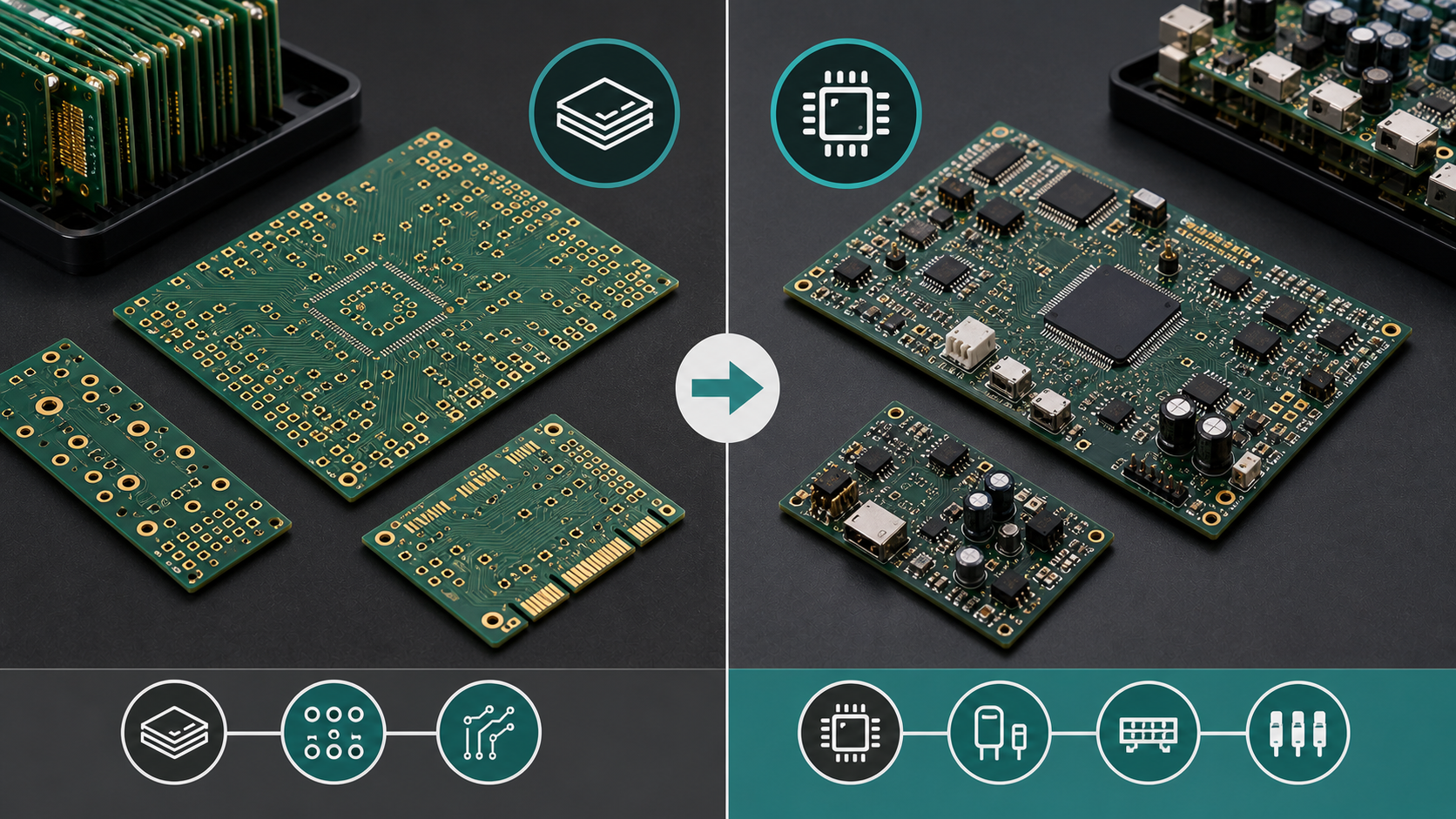
| Product Type | Typical Classification Question | Practical Risk |
|---|---|---|
| Bare PCB | Is it a printed circuit without mounted components? | Usually simpler to review under printed circuit provisions |
| PCBA | Does the assembly perform an electrical control, communication, power, or computing function? | May need classification by function or as a part of a machine |
| Control board | What equipment does it control, and is it dedicated to that equipment? | Can be classified as an electrical control apparatus or machine part |
| Finished module | Is it a complete functional device or a subassembly? | May move away from PCB headings entirely |
How to Decide the Right Circuit Board HS Code
The right circuit board HS code should be selected by product identity, assembly level, function, end use, and destination-country tariff rules. A good classification process is repeatable and documented, especially for recurring shipments.
- Confirm whether the product is a bare PCB, partially assembled board, full PCBA, or finished module.
- Identify whether components are mounted, such as ICs, resistors, capacitors, connectors, sensors, relays, LEDs, or power devices.
- Define the board’s function: signal routing, control, power conversion, lighting, communication, sensing, or machine operation.
- Check whether the board is a general electronic part or dedicated to a specific product or machine.
- Review the destination country’s tariff database, explanatory notes, and any binding rulings or local customs guidance.
- Keep evidence in the shipment file so the importer, broker, and supplier can explain the classification if customs asks.
Examples of Circuit Board Classification Scenarios
Classification scenarios help buyers understand why the same phrase, “circuit board,” can lead to different customs outcomes. The examples below are practical decision prompts, not binding legal classifications.
| Scenario | Likely Starting Point | What to Verify |
|---|---|---|
| Rigid FR-4 bare PCB panel | Printed circuit heading | No mounted components; only traces, holes, pads, plating, and solder mask |
| LED light board with mounted LEDs | Function and assembly review | Whether it is a lighting module, LED assembly, or part of a larger lamp |
| Motor control PCBA | Control apparatus or machine part review | Voltage, function, dedicated equipment, and component layout |
| Keyboard PCB without switches | Printed circuit or input-device part review | Whether it is bare, assembled, or dedicated to a keyboard product |
| Communication module PCBA | Telecommunication or electronic module review | Radio, network, connector, firmware, and final product function |
Information Suppliers Should Provide for HS Code Review
Suppliers should provide clear technical documentation so the importer or customs broker can classify the circuit board correctly. Vague descriptions such as “PCB board” or “electronic board” often create delays, reclassification risk, or customs questions.
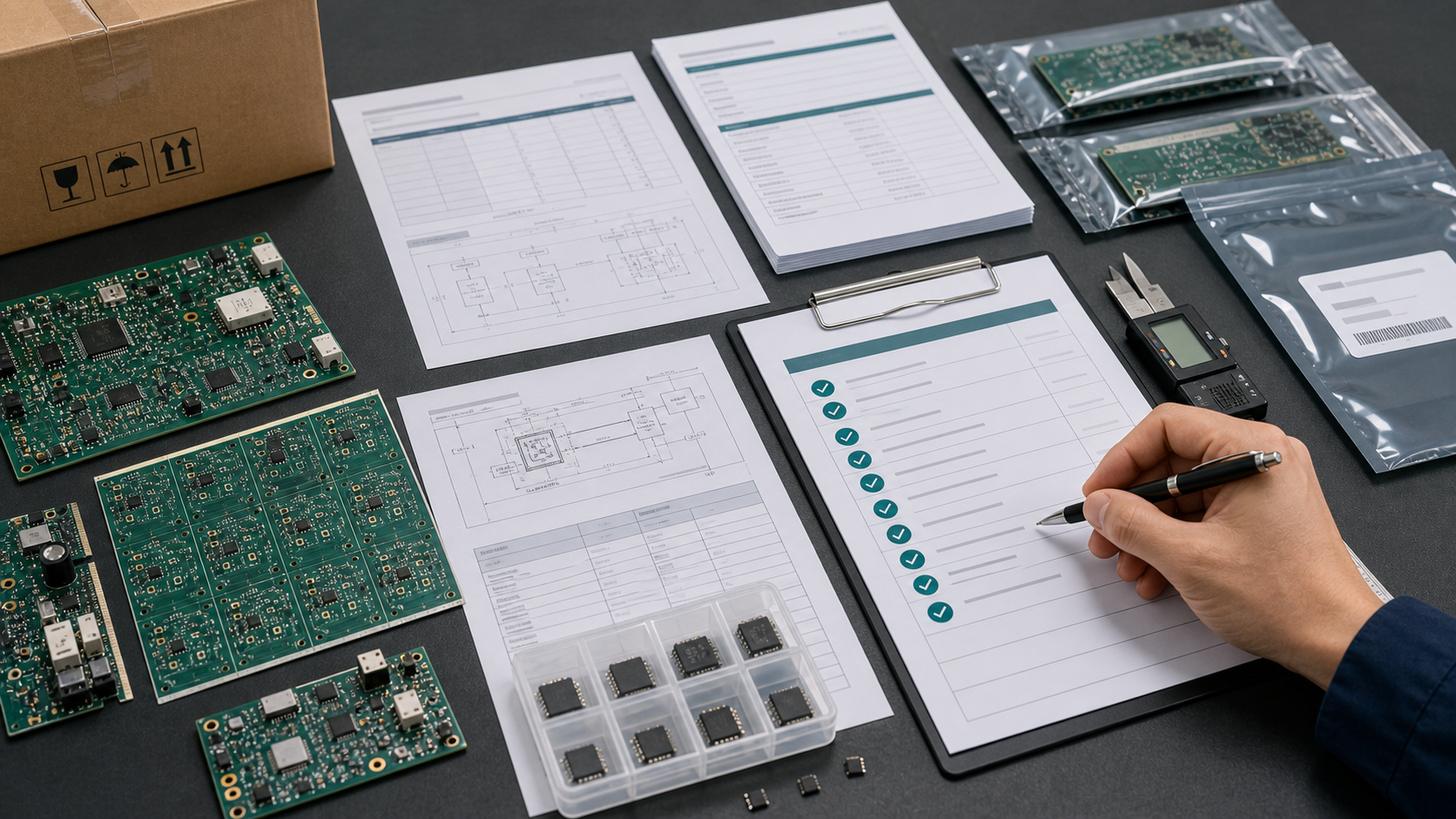
- Commercial product name and plain-English product description.
- Whether the item is bare PCB, PCBA, cable-connected module, or finished device.
- Bill of materials showing major components and whether assembly is complete.
- Gerber files, drawings, photos, and dimensional information when needed.
- End-use or equipment application, especially for dedicated control boards.
- Quantity, unit price, country of origin, Incoterms, and shipment purpose.
- Suggested HS/HTS code with a note that the importer must verify final classification locally.
Common Mistakes When Using Circuit Board HS Codes
The most common mistake is using one HS code for every circuit board shipment without checking assembly status or function. This can create duty errors, customs delays, and problems during audits.
- Using a bare PCB code for a populated PCBA with ICs and connectors.
- Describing a finished control module only as “PCB” on the invoice.
- Ignoring destination-country digits after the international six-digit HS level.
- Copying a supplier’s suggested code without importer or broker review.
- Using inconsistent descriptions across invoice, packing list, BOM, and product label.
- Failing to document whether the board is a replacement part, prototype, sample, or production item.
HS Code, HTS Code, and Tariff Code: What Is the Difference?
HS code usually refers to the international Harmonized System structure, while HTS or tariff code usually refers to a country’s extended tariff schedule. The first six digits are internationally based, but additional digits and duty treatment can vary by country.
For example, an exporter may use a six-digit HS heading for planning, while the importer must file a more detailed national code. The United States uses the Harmonized Tariff Schedule of the United States, often called HTSUS. Other markets may use different national extensions and import requirements.
How HS Code Affects Cost, Lead Time, and Compliance
HS code affects duty rate, import taxes, customs review, documentation, trade measures, and sometimes licensing or origin requirements. For circuit board buyers, the wrong code can change landed cost or delay a production schedule.
| Business Area | Why HS Code Matters | Practical Control |
|---|---|---|
| Landed cost | Duty rate and taxes may depend on classification | Confirm code before quotation or purchase order approval |
| Customs clearance | Unclear descriptions can trigger document checks | Use consistent invoice, packing list, and product descriptions |
| Trade compliance | Some classifications may interact with trade measures or controls | Ask importer or broker to verify destination-country rules |
| Production planning | Customs delay can affect assembly schedules | Prepare classification evidence before shipment |
Commercial Invoice Wording for Circuit Board Shipments
Commercial invoice wording should describe the actual product clearly enough for customs review. The phrase “circuit board” is often too broad by itself.
- For bare PCB: describe it as a bare printed circuit board, including material, layers, and whether it has no mounted components.
- For PCBA: describe it as an assembled printed circuit board and state its function or the product it is used in.
- For modules: describe the module function, major components, and whether it is a complete device or a part.
- For samples: state whether the item is a prototype, engineering sample, or commercial production item.
- For dedicated parts: identify the machine, system, or finished product when relevant.
Supplier Checklist Before Shipping PCB or PCBA Orders
A supplier checklist helps prevent classification surprises before the goods reach customs. The supplier should not make a legal classification decision for the importer, but it should provide complete technical facts.
- Confirm shipment contains bare PCB, PCBA, finished module, or mixed goods.
- Separate line items when one shipment includes both bare boards and assembled boards.
- Match invoice description to BOM, product photos, and packing list.
- Provide country of origin and manufacturing process details when requested.
- Ask the buyer whether a broker-approved code or binding ruling already exists.
- Keep shipment records for repeat orders so classification stays consistent.
When to Ask a Customs Broker or Request a Ruling
Importers should ask a customs broker or request official guidance when the circuit board is assembled, function-specific, high value, shipped repeatedly, or unclear under local tariff rules. A binding ruling can reduce uncertainty for recurring shipments.
This is especially important for control boards, communication modules, power supply boards, LED lighting boards, automotive electronics, medical equipment PCBAs, industrial machine parts, and mixed-function modules. The supplier can support the process with technical documents, but local customs interpretation belongs to the destination authority.
FAQ
What is the HS code for a circuit board?
A bare printed circuit board is often classified under HS heading 8534 for printed circuits, but a populated PCBA or functional electronic module may be classified under a different heading based on its final function.
Is a PCB and a PCBA the same HS code?
Not always. A bare PCB and a populated PCBA can be classified differently because a PCBA contains mounted components and may have an identifiable electrical function.
Can I use 8534 for all circuit boards?
No. Heading 8534 is generally for printed circuits. Once the board is assembled with components, importers should review the product function, components, and destination-country tariff rules before using a code.
What is the US HTS code for printed circuit boards?
In the US tariff schedule, printed circuits are listed under heading 8534. Importers should check the current HTSUS database and product details before filing because national subheadings and notes can change.
Who is responsible for the correct HS code?
The importer of record is usually responsible for correct customs classification. Suppliers can provide product descriptions, BOMs, drawings, and suggested codes, but final responsibility depends on local customs rules.
What documents help classify a circuit board?
Useful documents include the commercial invoice, product description, Gerber files or drawings, BOM, assembly status, end-use description, photos, datasheets, and a statement explaining whether the board is bare, assembled, or a functional module.
Should bare PCB and PCBA be listed separately on the invoice?
Yes, if both are shipped together. Separate line items make classification, valuation, and customs review clearer because bare PCBs and assembled PCBAs may not share the same code.
Can a supplier provide the HS code?
A supplier can suggest an HS code based on product knowledge and past shipments, but the importer should verify it with a broker or destination-country tariff authority before filing import documents.
Does the HS code change if components are mounted?
It can. Mounted components may change the product from a bare printed circuit into an assembly, part, or functional electronic device. The final classification depends on the product’s function and local rules.
Does firmware affect circuit board classification?
Firmware can matter when it helps define what the board does. A programmed control board or communication module may be reviewed differently from an unpopulated or generic board.
Is HS code the same in every country?
The first six HS digits are internationally based, but countries add extra digits and may apply different notes, duty rates, trade measures, or documentation requirements. Always verify the destination-country code.
What should I write on the invoice for a PCB shipment?
Write a clear product description such as “bare printed circuit board, no mounted components” or “assembled printed circuit board for industrial controller,” depending on the actual product. Avoid vague descriptions like “electronic parts” only.
Final Takeaway
The correct circuit board HS code depends on whether the item is a bare printed circuit, a populated PCBA, a dedicated part, or a finished functional module. Use 8534 as a common starting point for bare printed circuits, but do not assume it covers every assembled circuit board shipment. For repeat shipments, work with the importer, customs broker, and destination-country tariff database before final filing.
If you’re sourcing reliable PCB/PCBA manufacturing, including OEM, ODM, prototyping, mass production, or custom engineering solutions, reach out to our engineering team for technical support and a quote at [email protected].
0 Comments