




In chemistry, PCB means polychlorinated biphenyls, a family of synthetic chlorinated organic chemicals. This is different from PCB in electronics, where PCB means printed circuit board. The chemistry meaning is usually discussed in environmental science, toxicology, industrial safety, waste handling, and regulatory compliance.
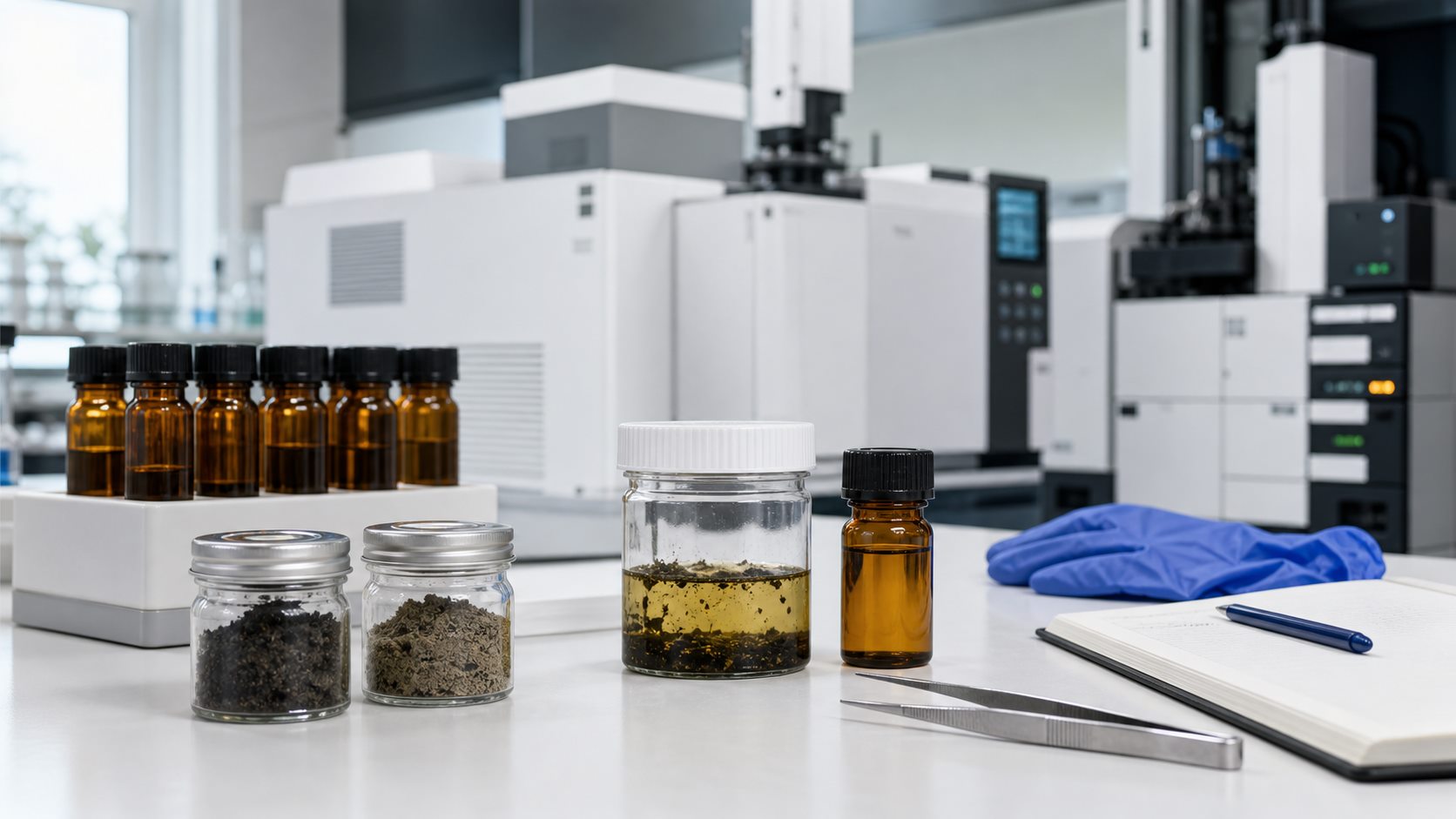
What PCB Means in Chemistry
PCB in chemistry stands for polychlorinated biphenyls, not printed circuit board. Polychlorinated biphenyls are a group of man-made compounds made from two linked benzene rings with different numbers and positions of chlorine atoms.
The term is plural because PCBs are not one single molecule. They are a chemical family with many related forms, often called congeners. The number and position of chlorine atoms change physical behavior, persistence, volatility, toxicity profile, and how the compound moves in the environment.
PCB Chemistry vs PCB Electronics
The abbreviation PCB has two very different meanings, so context matters. In chemistry, PCB usually refers to a regulated pollutant family. In electronics, PCB refers to the board that mechanically supports and electrically connects components.
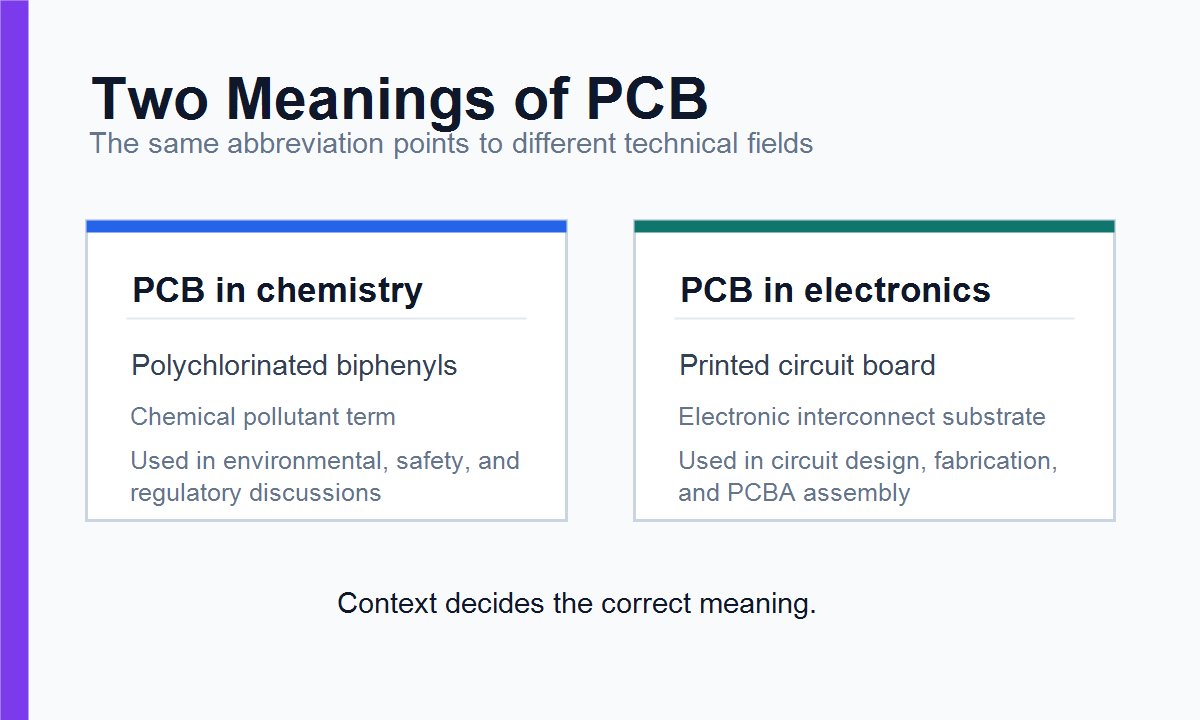
| Question | PCB in Chemistry | PCB in Electronics | How to Avoid Confusion |
| Full name | Polychlorinated biphenyls | Printed circuit board | Look for chemical, environmental, or electronics context. |
| Main field | Chemistry, environmental science, toxicology, waste control | Electronics design, PCB fabrication, PCBA assembly | The surrounding terms usually make the meaning clear. |
| Physical meaning | A family of chlorinated organic compounds | A laminate board with copper circuitry | One is a chemical group; the other is a manufactured electronic part. |
| Typical concern | Persistence, exposure, contamination, disposal, regulation | Materials, layers, impedance, soldering, assembly quality | Do not mix safety information for one meaning with the other. |
Chemical Structure of Polychlorinated Biphenyls
PCBs are based on a biphenyl structure, which means two benzene rings connected by a single bond. Chlorine atoms can replace hydrogen atoms at different positions on those rings, creating many possible PCB congeners.
This structure explains why PCBs are chemically stable and difficult to break down. More highly chlorinated congeners generally tend to be less water-soluble and more likely to bind to organic matter, oils, sediments, and fatty tissues. That chemistry is one reason PCBs remain important in environmental risk discussions long after many uses were banned or restricted.
Why PCBs Were Used Industrially
PCBs were historically used because they offered useful industrial properties: chemical stability, electrical insulating behavior, low flammability, and thermal resistance. Those properties made them valuable in certain electrical and industrial applications before their environmental and health risks became widely regulated.
Historical uses included some transformer fluids, capacitor fluids, hydraulic systems, heat-transfer fluids, plasticizers, sealants, coatings, and other specialty applications. Modern buyers and engineers should not assume current products contain PCBs, but older equipment, legacy materials, demolition projects, or contaminated sites may still require review by qualified environmental and safety professionals.
Key Properties That Make PCBs a Concern
PCBs are concerning because their same useful industrial stability also makes them persistent pollutants. They do not readily dissolve in water, they can bind to soil and sediment, and they can accumulate in fatty tissues.
| Property | What It Means | Why It Matters |
| Chlorinated organic structure | Carbon-based biphenyl structure with chlorine atoms | Contributes to chemical stability and environmental persistence. |
| Low water solubility | PCBs do not easily dissolve in water | They often associate with oils, organic matter, soil, and sediment. |
| Hydrophobic behavior | They tend to avoid water and favor organic phases | This supports bioaccumulation concerns in environmental systems. |
| Thermal and chemical stability | They resist breakdown under many normal conditions | Legacy contamination can remain a long-term management issue. |
| Congener variation | Different chlorine positions create different PCB forms | Testing and risk assessment may need congener-specific analysis. |
How PCBs Move Through the Environment
PCBs can move through air, soil, sediment, water systems, and food chains depending on the congener, release source, and site conditions. Because they bind strongly to particles and organic matter, contaminated sediment and dust can become important exposure pathways.
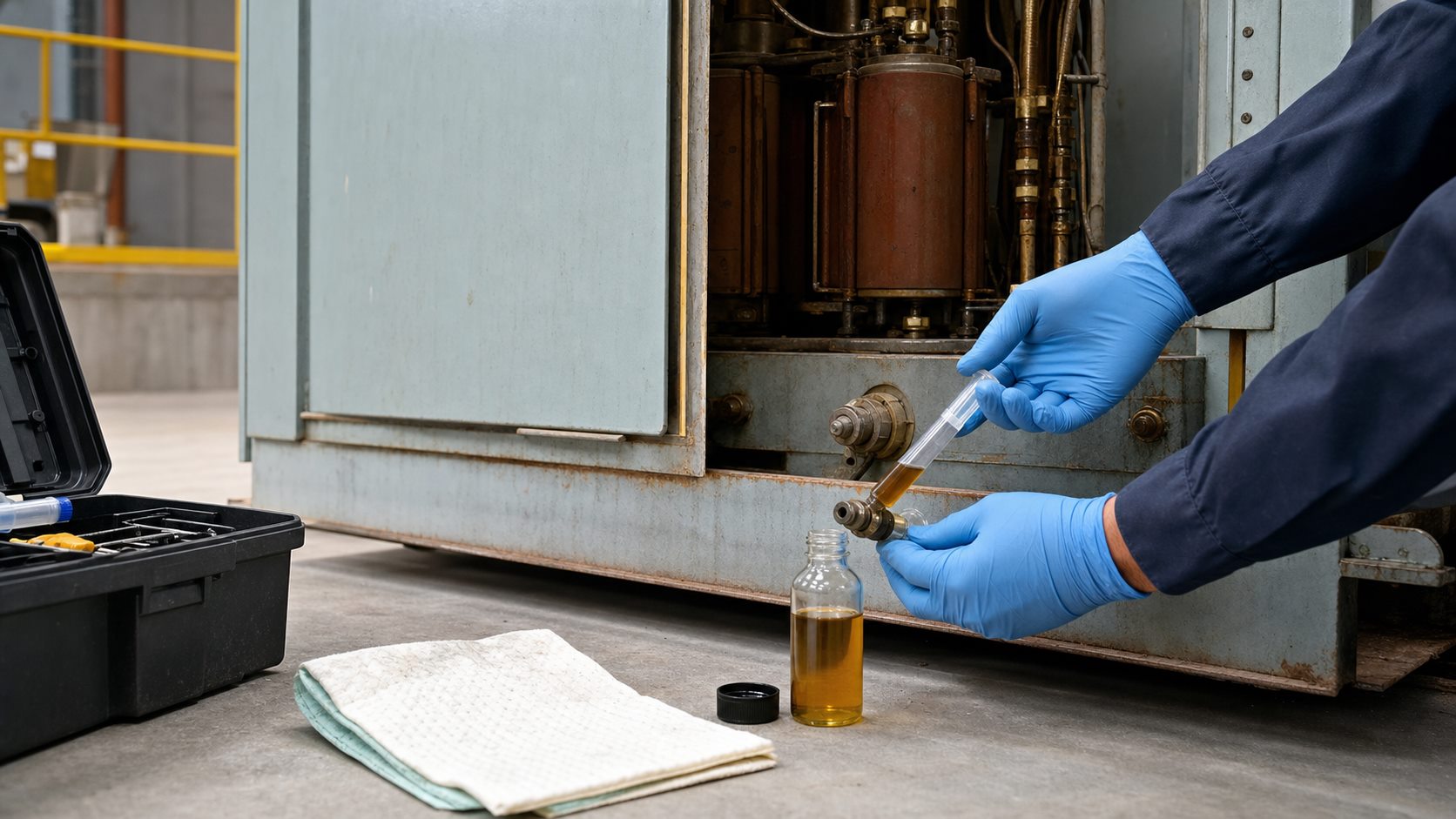
Environmental agencies often discuss PCBs as persistent organic pollutants. In practical terms, that means a small release can become a long-lived issue if it reaches soil, building materials, sediment, or other reservoirs that are hard to clean. For industrial sites, the first step is usually source identification, sampling, documentation, and compliance review under local law.
Health and Safety Considerations
PCB exposure is treated as a serious health and safety topic because some PCBs are associated with harmful effects in humans and animals. Exact risk depends on the type of PCB, exposure level, exposure route, duration, and individual conditions.
Common discussion points include contaminated food, occupational exposure, contaminated building materials, older electrical equipment, and waste handling. This article is not medical or legal advice. If exposure is suspected, use qualified environmental testing, occupational safety guidance, and local regulatory requirements rather than relying on visual inspection or assumptions.
Regulatory and Compliance Context
PCBs are regulated in many countries because of their persistence, toxicity concerns, and legacy use in equipment and materials. In the United States, the EPA provides PCB rules and cleanup guidance; internationally, PCBs are addressed under persistent organic pollutant frameworks such as the Stockholm Convention.
For importers, manufacturers, property owners, and contractors, the practical lesson is simple: do not guess. If an old transformer, capacitor, coating, sealant, oil, or demolition material may involve PCBs, verify with documentation, testing, and qualified compliance support. Requirements can differ by country, state, material type, concentration, disposal method, and project scope.
How PCBs Are Tested and Identified
PCBs are normally identified through laboratory analysis, not by appearance or smell. Samples may come from oils, wipes, soils, sediments, building materials, waste streams, or equipment fluids depending on the suspected source.
- Review equipment labels, age, service records, and safety documentation.
- Use qualified sampling methods for oil, material, soil, dust, or sediment.
- Send samples to a laboratory experienced with PCB analysis.
- Keep chain-of-custody records when results may affect compliance or disposal.
- Use the result units and thresholds required by the relevant jurisdiction.
- Do not cut, heat, drain, recycle, or dispose of suspected PCB-containing material without proper review.
PCB in Chemistry for Electronics Buyers
Electronics buyers searching this term may be trying to understand whether PCB manufacturing involves the same PCB chemicals. A printed circuit board is not the same thing as polychlorinated biphenyls, even though both use the abbreviation PCB.
Modern PCB manufacturing discussions usually focus on laminates, copper foil, solder mask, surface finish, drilling, plating, soldering, assembly cleanliness, RoHS, REACH, halogen-free materials, and waste treatment. Those topics are separate from the historical chemical group called polychlorinated biphenyls. If a project involves environmental compliance, ask for the exact standard, material declaration, or test report required for the destination market.
Practical Checklist for Industrial Teams
Industrial teams should treat the chemistry meaning of PCB as a compliance and safety question, especially when legacy equipment or contaminated materials may be involved. The correct action is evidence-based verification, not assumption.
- Clarify whether PCB means polychlorinated biphenyls or printed circuit board in the document or search query.
- For chemical PCB concerns, identify the suspected source, material, and site history.
- Check official guidance from relevant environmental authorities.
- Use qualified sampling and laboratory testing where required.
- Keep documentation for equipment status, test results, disposal, and transport.
- For electronics sourcing, request material declarations and compliance documents relevant to circuit board manufacturing instead of chemical PCB pollutant data.
Useful Official References
For chemical safety, environmental, or regulatory decisions, official references should be used before secondary summaries. Useful starting points include the EPA’s PCB information pages, ATSDR toxicological summaries, and international persistent organic pollutant guidance.
FAQ
What is PCB in chemistry?
PCB in chemistry means polychlorinated biphenyls, a family of synthetic chlorinated organic compounds. It does not mean printed circuit board in this context.
Is PCB in chemistry the same as PCB board?
No. PCB in chemistry means polychlorinated biphenyls, while PCB in electronics means printed circuit board. They are completely different technical meanings that share the same abbreviation.
Why are polychlorinated biphenyls called PCBs?
They are called PCBs because their chemical structure is based on biphenyl molecules with chlorine atoms attached. The name polychlorinated biphenyls describes that chlorinated biphenyl structure.
Are PCBs still used today?
Many historical uses of polychlorinated biphenyls have been banned or restricted in many regions. However, PCBs may still be present in older equipment, legacy building materials, contaminated sites, or waste streams.
Why are PCBs dangerous?
PCBs are concerning because they can persist in the environment, bind to sediments and organic matter, accumulate in living organisms, and may be associated with harmful health effects depending on exposure.
Can you identify PCBs by smell or appearance?
No. Suspected PCB-containing materials should be identified through documentation and laboratory testing. Appearance, odor, and age alone are not reliable enough for safety or compliance decisions.
Where might PCBs be found in old industrial sites?
They may be associated with some older electrical equipment, oils, capacitors, transformers, hydraulic fluids, sealants, coatings, sediments, or contaminated building materials. Site history and testing are needed for confirmation.
Do printed circuit boards contain polychlorinated biphenyls?
A printed circuit board is not the same thing as polychlorinated biphenyls. Modern PCB compliance discussions usually focus on materials, soldering, RoHS, REACH, halogens, and manufacturing controls rather than the chemical pollutant called PCBs.
What does congener mean for PCBs?
A congener is one specific form within the PCB chemical family. Different congeners have different numbers and positions of chlorine atoms, which can affect their behavior and risk profile.
How are PCBs tested?
PCBs are tested through laboratory analysis of samples such as oil, soil, sediment, wipe samples, building materials, or waste. The correct sampling method depends on the suspected source and regulatory purpose.
Are PCBs water soluble?
PCBs generally have low water solubility and tend to associate with oils, organic matter, soil, and sediment. This behavior is one reason environmental cleanup can be difficult.
What should I do if I suspect PCB contamination?
Do not disturb, heat, drain, recycle, or dispose of suspected material without proper review. Contact qualified environmental, safety, or regulatory professionals and follow local testing and disposal requirements.
Final Takeaway
PCB in chemistry means polychlorinated biphenyls, a regulated family of persistent chlorinated organic chemicals. PCB in electronics means printed circuit board, so the correct meaning depends entirely on context.
If your search was actually about printed circuit boards, PCB fabrication, PCBA assembly, prototypes, OEM/ODM production, or custom engineering support, reach out to our engineering team for technical support and a quote at [email protected].
0 Comments