




What Should a China Prototype PCB Order Prove?
A China prototype PCB order should prove three things before you commit to production: the design can be fabricated, the finished bare boards match the released data, and the quotation assumptions are complete enough to repeat. A low unit price is useful only after those three conditions are clear.
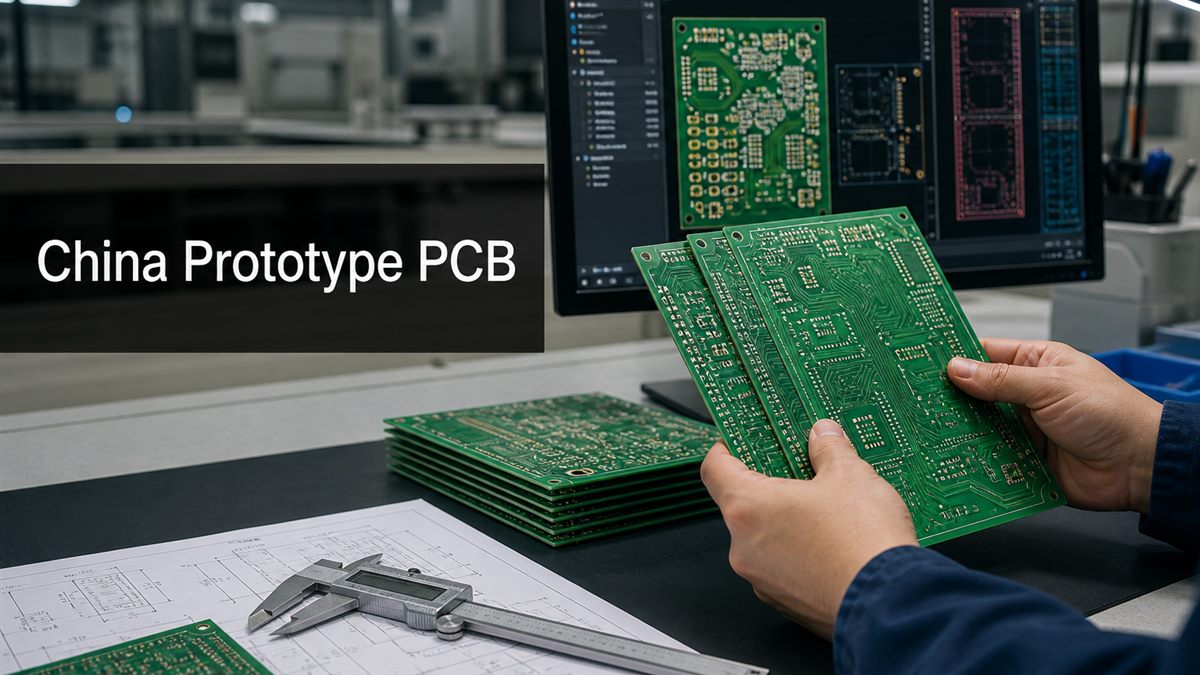
A prototype is not merely a smaller production order. It is a controlled learning build. The board may expose missing fabrication notes, weak footprints, insufficient clearances, ambiguous drill data or a test plan that cannot separate a design fault from a manufacturing fault. Treat the first build as a technical review with physical evidence.
If you are still defining the role of the first build, start with this explanation of what a PCB prototype is. The procurement work begins when that purpose is translated into released files, measurable acceptance checks and documented quote assumptions.
Prototype PCB vs Production PCB: What Changes?
A prototype and a production PCB may use the same design data, but they answer different questions. The prototype verifies design and process assumptions; production must repeat the approved result at scale.
| Decision | Prototype build | Production build |
| Primary purpose | Find design, file and manufacturability problems | Repeat an approved configuration consistently |
| Quantity | Enough boards for assembly, test and destructive analysis if needed | Demand-driven quantity with yield and logistics planning |
| Change tolerance | Engineering changes are expected and recorded | Changes require controlled approval |
| Acceptance evidence | Electrical test, dimensions, visual inspection and build notes | Released inspection plan, traceability and lot controls |
| Quote focus | Tooling, minimum charges, expedited steps and learning value | Unit economics, repeatability, capacity and supply continuity |
Do not approve production from “the boards worked” alone. Record the exact Gerber revision, drill data, stackup, material callout, copper weight, finish, test method and any factory-approved CAM changes. That record is the bridge from an experiment to a repeatable build.
What Files Are Needed for an Accurate Prototype Quote?
An accurate quote needs enough manufacturing data to define the board without guessing. At minimum, provide the Gerber or another accepted fabrication dataset, NC drill files, a fabrication drawing or clear fabrication notes, board outline and quantity.
- Layer artwork: copper, solder mask and silkscreen layers with clear naming.
- NC drill data: plated and non-plated holes identified correctly.
- Board outline: one unambiguous profile, including slots, cutouts and routing notes.
- Fabrication drawing: finished thickness, material, copper, finish, tolerances and special requirements.
- Netlist when available: an independent reference for electrical-test preparation.
- Readme or revision note: design revision, units, intended quantity and exceptions.
Before sending files, inspect the plotted output rather than trusting only the CAD view. This guide to PCB Gerber manufacturing data explains why missing apertures, wrong origins and duplicate outlines can survive export but fail at CAM review.
Which Board Specifications Must Be Locked Before Quoting?
Lock every specification that changes material, processing, inspection or tooling. If a field is left open, two suppliers can return very different prices for boards that are not technically equivalent.
- Layer count and approved stackup or stackup constraints
- Base material family and any required thermal or high-frequency properties
- Finished board thickness and copper weight
- Minimum trace/space and smallest finished hole
- Controlled-impedance requirements and applicable coupon or report needs
- Surface finish and any connector-contact requirements
- Solder mask color, silkscreen requirements and marking restrictions
- Finished dimensions, outline tolerance, slots and edge features
- Electrical-test scope and documentation expectations
Separate a true requirement from a default preference. For example, do not request a specialized material because it appears in an old template if the circuit does not need its electrical or thermal properties. Conversely, do not let a quote silently substitute a material when the design depends on a controlled Dk, Tg or thermal behavior.
How Does DFM Reduce First-Build Risk?
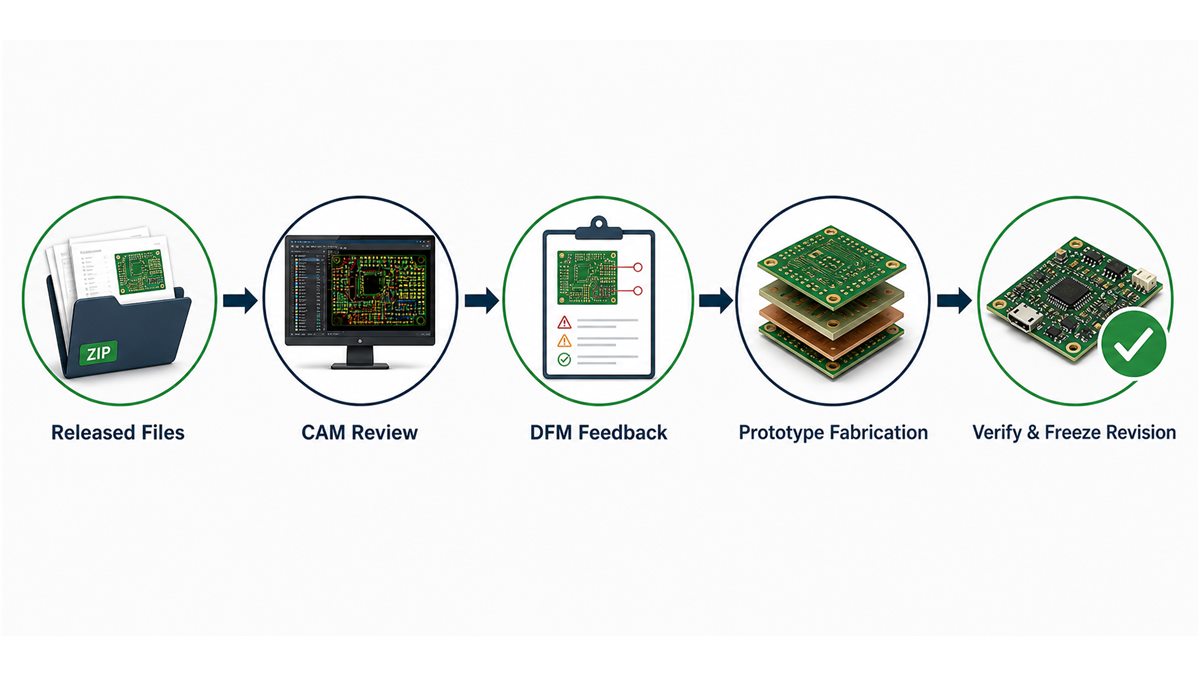
DFM reduces first-build risk by finding places where the design data can be interpreted correctly but is difficult, unstable or expensive to fabricate. A useful DFM response identifies the feature, the manufacturing consequence and the proposed change.
Review annular rings, copper-to-edge distance, mask dams, via structures, aspect ratio, fine traces, copper balance, routed slots, impedance structures and panel handling. Fine-line work also needs finished-width thinking: the relationship between artwork and etched copper is explained in this PCB etch factor guide.
Do not accept a vague “DFM passed” as the entire record. Ask whether CAM changed the outline, drill compensation, copper clearances, teardrops, solder mask openings or panel features. Approve material changes and functional geometry changes explicitly. The distinction between manufacturability and assembly needs is covered in this introduction to DFM and DFA in PCB manufacturing.
Which Choices Change Prototype Cost and Lead Time?
Prototype cost and lead time change when the board moves away from a supplier’s standard material, panel, tooling or process flow. The cheapest way to reduce cost is usually to remove unnecessary exceptions, not to weaken an actual requirement.
| Cost driver | Why it changes the build | Buyer check |
| Layer count and stackup | Adds imaging, lamination and registration work | Confirm that every layer is functionally needed |
| Material availability | Non-stock laminate may require procurement or a different panel plan | Ask for the exact proposed material, not only a generic family name |
| Fine features and small holes | Tightens imaging, drilling, plating and inspection controls | Identify the true minimum feature in the released data |
| Special finishes | Adds process steps, handling or external processing | Match finish to soldering, storage and contact needs |
| Controlled impedance | Requires stackup calculation and process control | Provide target impedance, tolerance, geometry and reference layer |
| Expedite request | Compresses queue and review time | Separate fabrication time from shipping time |
When comparing a low headline price, check tooling, electrical test, impedance coupons, engineering review, surface finish, shipping and payment fees. The same normalization principle applies when reviewing a low-cost PCB manufacturer in China.
How Should You Choose Quantity and Panelization?
Choose enough boards to complete assembly setup, functional testing, rework learning and at least one retained reference. Ordering only one usable board can turn a small assembly mistake into a complete project delay.
For a new design, divide the quantity by purpose before requesting a quote: assembly samples, engineering test units, destructive or environmental test units, spares and retained golden samples. The right count depends on the validation plan, not on a universal prototype number.
Panelization should support fabrication and the intended assembly method. State whether you need individual boards, a customer panel or a factory panel. If assembly follows, confirm rail width, tooling holes, fiducials, breakaway method, component-to-edge clearance and whether depanelization stress can affect nearby components.
Which Inspection and Electrical Tests Should Be Requested?
Request tests that prove the bare board matches the released electrical and mechanical intent. Visual inspection alone cannot demonstrate net continuity or isolation.
- Electrical test: continuity and isolation against the manufacturing netlist or supplied netlist.
- Dimensional checks: board outline, critical slots, connector edges and hole locations.
- Visual inspection: conductor defects, mask registration, exposed copper, legend conflicts and surface-finish condition.
- Impedance verification: coupon or other agreed evidence when controlled impedance is specified.
- Microsection or special analysis: only where the via structure, qualification plan or risk justifies it.
Define what evidence you need before the order. A test included in the process does not automatically mean a detailed report ships with every prototype. If a report, coupon, measurement record or first-article dimension sheet is needed, put it in the RFQ.
What Usually Fails on a First PCB Build?
First builds often fail at interfaces: CAD export to CAM, schematic intent to footprint, drill definition to finished hole, or prototype result to production revision. The table below turns common symptoms into checks.
| Observed problem | Possible cause | Prevention or checkpoint |
| Connector or enclosure mismatch | Outline, slot or hole location not verified against mechanics | Overlay mechanical data and inspect critical dimensions |
| Open or intermittent connection after assembly | Footprint, annular ring, via or solderability issue | Review footprint land pattern, drill-to-copper and assembly process |
| Unexpected short | File error, mask opening, copper clearance or assembly bridge | Separate bare-board electrical results from assembly inspection |
| Impedance outside expectation | Stackup, copper thickness or geometry assumption changed | Approve the production stackup and verification method |
| Quote changes after order | Missing specification or feature discovered during CAM review | Send a complete fabrication drawing and request DFM before payment |
| Prototype works but production cannot repeat it | CAM changes or substitutions were not captured | Freeze the as-built package and approval record |
How Do You Compare China Prototype PCB Quotes?
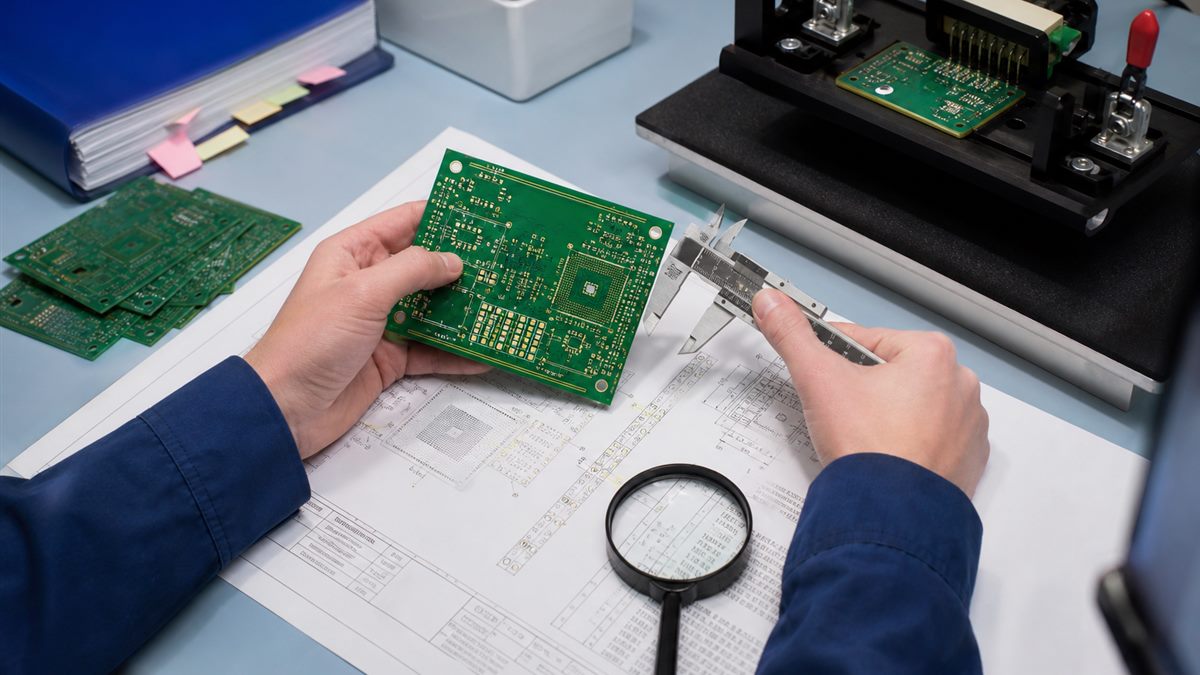
Compare quotes only after normalizing the technical scope. Two totals are not comparable if one includes electrical test and the other assumes a different material, finish, stackup or shipping method.
- Step 1: Match the released revision. Confirm every supplier quoted the same file package and quantity.
- Step 2: Compare proposed specifications. Check material, thickness, copper, finish, impedance and special-process notes line by line.
- Step 3: Separate one-time and recurring charges. Tooling or engineering charges affect a prototype differently from repeat production.
- Step 4: Check the test and report scope. Confirm electrical test, coupons, inspection records and any requested measurements.
- Step 5: Compare schedule boundaries. Distinguish engineering review, fabrication, holiday/queue effects and shipping.
- Step 6: Review change control. Decide who may approve CAM edits, substitutions or specification deviations.
The best comparison is the one that makes the delivered boards technically equivalent. Price becomes meaningful after scope is aligned.
What Questions Should You Ask Before Placing the Order?
Ask questions that reveal how the supplier will interpret, verify and preserve your design—not questions that invite only a yes/no marketing answer.
- Which files and revision did you use for this quote?
- What exact material and stackup will be used?
- Which features triggered DFM comments or non-standard processing?
- Will any CAM edits require written approval?
- What electrical test is included, and what evidence is available?
- How are controlled-impedance requirements verified, if applicable?
- Are tooling, test, documentation, packing and shipping included?
- What data will be retained for a repeat order?
- How should an engineering revision be identified after the first build?
How Do You Move from Prototype to Production?
Move to production only after freezing the as-built package and recording what the prototype proved. The production release should not depend on memory, email fragments or an unlabeled sample.
Archive the final fabrication data, approved DFM responses, stackup, material, finish, test requirements, deviations and board marking. Record assembly and functional-test findings that require a design change. Then issue a new controlled revision rather than silently replacing files under the same identifier.
Use one accepted board as a physical reference, but do not treat it as the only specification. A golden sample cannot show hidden stackup details or every allowed tolerance. The controlled data package remains the manufacturing authority.
China Prototype PCB RFQ Checklist
A complete RFQ lets engineering review begin before price becomes the only discussion. Copy this checklist into the request and mark any item that is intentionally left to supplier recommendation.
- Project name, board revision and requested quantity
- Gerber/ODB++/IPC-2581 data as accepted by the supplier, plus drill files
- Board outline, dimensions, slots, cutouts and tolerance notes
- Layer count, stackup requirement and controlled-impedance details
- Material, finished thickness and copper weight
- Surface finish, solder mask and legend requirements
- Critical finished hole sizes and edge/contact features
- Electrical-test and documentation requirements
- Panel or individual-board delivery preference
- Required date separated into fabrication and delivery targets
- Permission boundary for CAM changes and substitutions
- Future production volume range, if it affects process planning
When Is PCBTRY a Practical Fit?
PCBTRY is a practical comparison option when you need a China source for custom bare-board prototyping and want engineering review before moving toward repeat production. Fit depends on the released files, material, stackup, feature sizes, test requirements and delivery target; those details should be reviewed rather than assumed.
For a useful quotation, send the Gerber and drill package, fabrication notes, quantity, material, thickness, copper, finish, impedance requirements and target schedule. Request a DFM review together with the quote so technical exceptions are visible before the order is released. Contact the engineering team at [email protected].
Frequently Asked Questions
Is a China prototype PCB the same as a PCBA prototype?
No. A PCB prototype is normally the fabricated bare circuit board. A PCBA prototype adds component procurement, solder paste printing, placement, reflow or through-hole assembly, inspection and often functional testing. State clearly whether the quote is bare-board only or includes assembly.
How many prototype boards should I order?
Order enough for assembly setup, engineering tests, possible rework, destructive analysis where needed, spares and one retained reference. The correct number follows the validation plan. A single board may be cheaper initially but can delay the project if it is damaged during assembly or test.
Do I need a fabrication drawing if I already have Gerber files?
A fabrication drawing or clear fabrication notes are strongly useful because Gerber geometry does not fully communicate material, finished thickness, copper, finish, tolerance, impedance, marking and special inspection requirements. The drawing reduces assumptions and makes quote comparison more reliable.
Should I send the original PCB design file?
Send the manufacturing outputs requested by the supplier and retain the editable source under your own revision control. A supplier may accept native CAD files for review, but the released fabrication package should still be explicit so both sides can identify exactly what was built.
Does every prototype need controlled impedance?
No. Controlled impedance is necessary only when the circuit and interconnect performance require it. If it is required, specify the target, tolerance, trace geometry, reference layer and any coupon or report expectations. Adding it without a design reason can increase review and process requirements.
Which surface finish should I choose for a prototype?
Choose the finish from assembly method, pad geometry, storage, contact use and later production intent. A prototype finish should ideally represent the planned production process when finish influences soldering or contact performance. Confirm the available options and trade-offs with the manufacturer.
Can the supplier change my Gerber data during CAM?
Factories commonly apply process compensation, but functional geometry or specification changes should follow an agreed approval boundary. Ask the supplier to identify significant CAM edits and preserve the approved as-built data so a repeat order does not depend on undocumented changes.
What is the difference between electrical test and functional test?
Bare-board electrical test checks continuity and isolation between PCB nets. Functional test applies to an assembled board and verifies intended behavior under defined conditions. A bare PCB can pass electrical test while the assembled product still fails because of design, component or assembly problems.
Why can the final quote differ from the online estimate?
An online estimate may use default assumptions. CAM review can reveal special material, fine features, impedance, small holes, unusual routing, documentation or test requirements that change processing. A complete RFQ and early DFM review reduce these late differences.
What should be saved after the prototype passes?
Save the released and as-built fabrication package, approved DFM responses, stackup, material, finish, test requirements, deviations, inspection evidence and design revision. Keep a labeled physical reference board as supporting evidence, not as a substitute for controlled manufacturing data.



0 Comments