




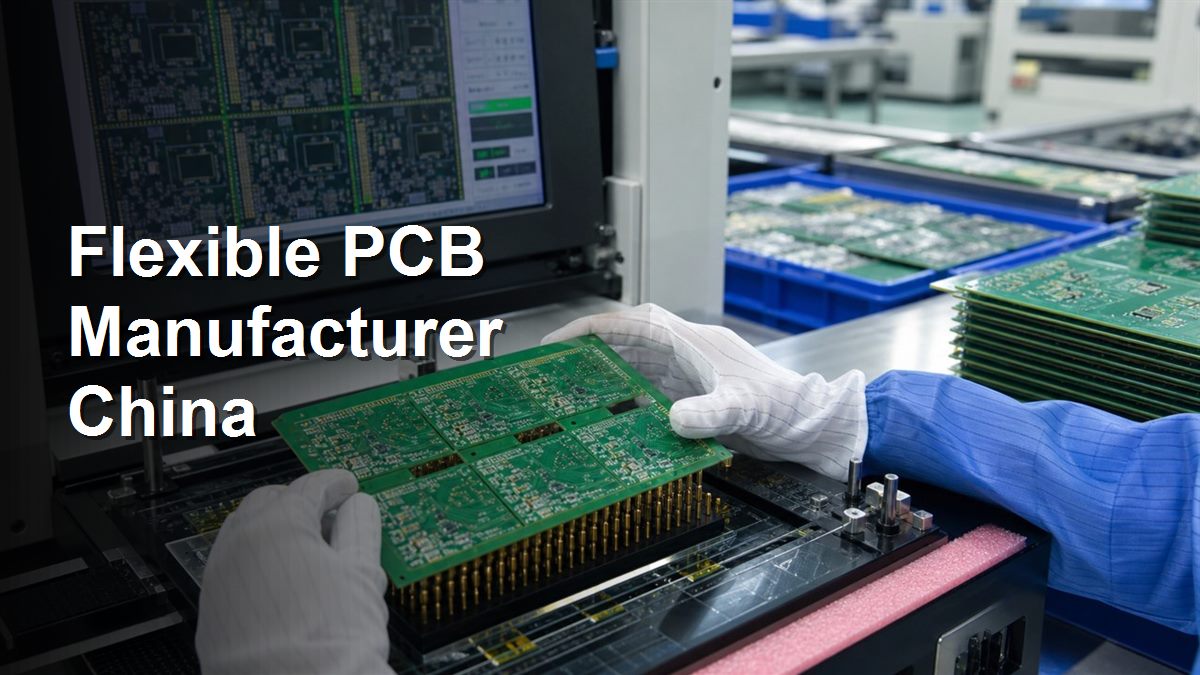
A flexible PCB manufacturer in China should be evaluated by bend-area control, material choice, stiffener support, dimensional stability and test handling. Flex circuits fail when the drawing does not explain how the board bends, where copper is allowed, and how the assembly will be supported.
This guide is written for engineers and buyers who need a practical sourcing path: what to send, what to check, where quotes change, and how to compare a supplier response before releasing production. For related preparation work, review Gerber file preparation and how to get a PCB made.
What Should a Flexible PCB Manufacturer in China Check First?
The first review should confirm whether the design data, board purpose and production assumptions match. A supplier can price a simple file package quickly, but a useful engineering review should also catch missing stackup notes, unclear tolerances, unrealistic holes, unsupported finishes, risky component placement and testing gaps.
For low-volume or first-build work, ask the supplier to separate mandatory issues from optional improvements. Mandatory issues stop fabrication or assembly. Optional improvements reduce cost, yield risk or later rework.
Flexible PCB Materials and Stackup Decisions
A complete RFQ package gives the supplier enough information to quote without guessing. At minimum, send the manufacturing files, drawings, quantity, delivery target and any assembly or test documents. If the quote involves assembly, include the BOM and CPL at the same time.
| Item | Why it matters |
| Stackup and polyimide | Controls bend life, thickness, adhesive choice and manufacturability. |
| Bend area drawing | Shows where copper, vias, stiffeners and components must stay out. |
| Stiffener details | Material, thickness, adhesive and outline affect assembly and connector support. |
| Test plan | Electrical test, dimensional checks and bend/handling notes reduce prototype risk. |
Bend Areas, Stiffeners and Component Keep-Outs
Cost and lead time usually change when the supplier finds a process constraint, missing document or component risk. Layer count, board size, copper weight, surface finish, impedance, small drills, panel use and test scope are common price drivers. For assembly projects, component sourcing and test fixtures can matter more than the bare PCB price.
Buyers should compare quotes by assumption, not only total price. A lower quote may exclude testing, substitute approval, X-ray, tooling, engineering review or delivery terms.
Quality Checks for Flexible PCB Fabrication
DFM and first-article checks are where many avoidable problems are found. Ask whether the files match the selected process window, whether any design feature increases yield risk, and whether the supplier needs written approval before changing panelization, drill size, solder mask clearance, component alternates or test coverage.
- Check board outline, slots, castellations and edge clearance.
- Confirm solder mask bridges, annular ring, drill tolerance and copper-to-edge distance.
- Review polarity marks, pin-one orientation and connector direction.
- Confirm AOI, electrical test, X-ray or functional test scope when relevant.
Flexible PCB Manufacturer China RFQ Checklist
The right decision depends on what the first build is supposed to prove. If the goal is electrical bring-up, order enough boards to test rework and firmware. If the goal is buyer approval or pilot production, request process notes, inspection photos and packaging details. If the design is stable, ask for the next quantity break so the supplier can suggest a better panel or assembly plan.
When Is Rigid-Flex Better Than a Flexible PCB?
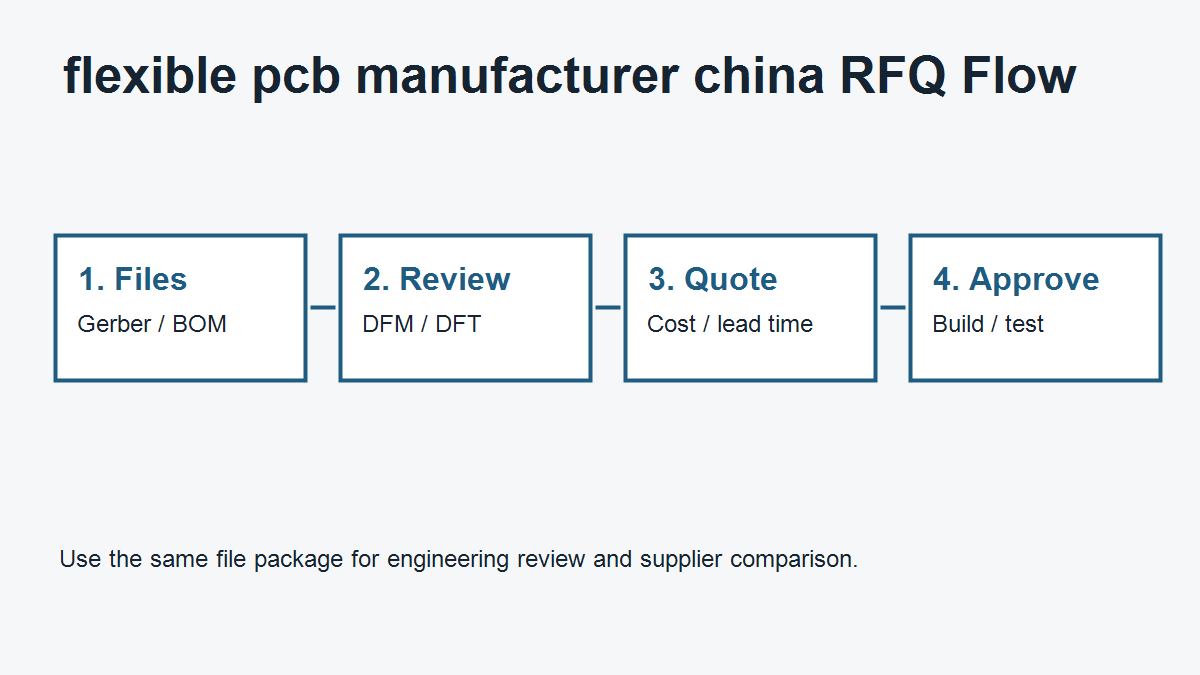
Before sending the RFQ, prepare one clean ZIP package and one short note explaining the project goal. Include:
- Gerber or ODB++ files and NC drill data.
- Fabrication drawing with material, thickness, copper, finish and tolerance notes.
- BOM with exact MPNs, alternates and DNI items if assembly is required.
- CPL / pick-and-place data with rotation and side information.
- Assembly drawing, polarity notes, programming file and test instructions when available.
- Quantity, target lead time, shipping destination and expected next production stage.
For commercial comparison, send the same file package to each supplier. That makes the response easier to compare and reduces hidden quote differences. You can also use PCBTRY for an engineering review and comparison quote.
FAQs
What data does a flexible PCB manufacturer in China need?
Send the Gerber or ODB++ files, flex stackup, polyimide thickness, copper weight, coverlay requirement, bend-area drawing, stiffener drawing, adhesive notes and final application constraints.
Why are bend areas important in flexible PCB fabrication?
Bend areas decide where copper, vias, components and stiffeners should not be placed. If the bend area is not marked, the supplier may fabricate a board that passes electrical test but fails during installation.
Should I choose adhesive or adhesiveless flex material?
Adhesiveless material is often preferred for thinner builds, tighter bending and better thermal performance, while adhesive constructions may be used for cost or specific stackup needs. Confirm with the supplier against your bend radius and reliability target.
What should be checked before quoting flexible PCBs?
Check bend radius, dynamic or static bending, copper grain direction, coverlay openings, stiffener placement, connector support, outline tolerance and whether testing requires a fixture.
Can a flexible PCB manufacturer also assemble components?
Some can, but assembly introduces handling, fixture and strain-relief requirements. If components are mounted on the flex, provide the BOM, CPL, stiffener data and packaging notes with the RFQ.
When is rigid-flex better than a simple flex PCB?
Rigid-flex is better when the design needs stable component areas plus flexible interconnects, fewer connectors or controlled three-dimensional folding. It costs more but can reduce assembly risk in compact products.
What are common flexible PCB failure risks?
Common risks include copper cracking at bends, adhesive delamination, weak stiffener bonding, torn flex tails, misaligned coverlay and connector stress during repeated use.
How should I compare flexible PCB suppliers?
Compare experience with similar stackups, bend-area review quality, tolerance communication, test method, packaging method and whether the supplier asks engineering questions before quoting.
Does flexible PCB need special packaging?
Yes. Flex tails, coverlay edges and stiffener areas can be damaged in shipping. Ask for protective packaging that keeps the board flat or supported according to the final shape.
When should I contact PCBTRY?
Contact PCBTRY when you need China flexible PCB fabrication review, bend-area checks and quotation support. Send drawings and stackup notes to
Final RFQ Step
If you are preparing a PCB or PCBA project and want an engineering review before ordering, send your Gerber files, BOM, CPL, quantity, material notes, copper weight, surface finish, test requirements and target delivery date to [email protected]. The team can review the package, point out quote risks and provide a manufacturing or assembly quotation.


0 Comments