Blog
PCB FR4 Material Guide: Properties, Stackup and Quote Checks
Choose PCB FR4 material by matching Tg, Dk, Df, thickness, copper and application risk to the actual board requirement.




Choose PCB FR4 material by matching Tg, Dk, Df, thickness, copper and application risk to the actual board requirement.
Understand FR4 dielectric constant, why Dk is not one fixed value, and how to use it in stackup, impedance and material decisions.
Learn how to read an FR4 datasheet for PCB quotation, including Tg, Dk, Df, CTE, CTI, thickness and material substitution checks.
Learn how FR4 material density affects PCB weight estimates, shipping, enclosure fit and quote checks for rigid circuit boards.
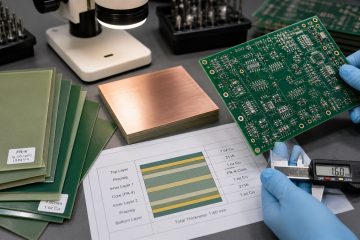
Learn what FR4 PCB material is, how Tg, thickness, copper, dielectric properties and DFM limits affect fabrication, cost and reliability.
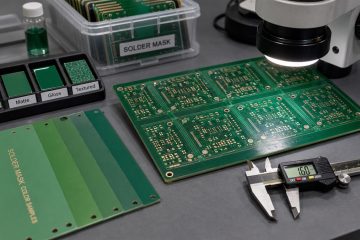
Learn what PCB solder mask does, how solder mask openings, colors, clearance, thickness and DFM checks affect fabrication, assembly and reliability.
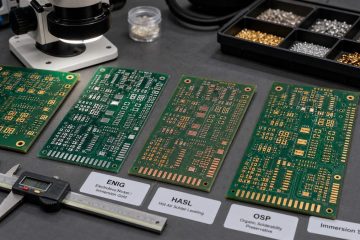
Compare PCB surface finish types including HASL, lead-free HASL, ENIG, OSP, immersion silver and immersion tin, with solderability, cost and DFM checks.
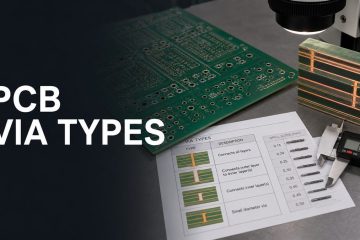
Learn the main PCB via types, how through vias, blind vias, buried vias, microvias and via-in-pad differ, and what to check before fabrication.
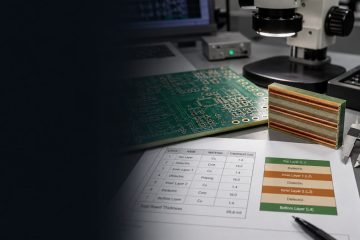
Learn a practical 4 layer PCB stackup, when to use signal-ground-power-signal layers, what to check for impedance, copper balance, vias and fabrication.

Learn circuit card assembly testing methods, what AOI, X-ray, ICT, flying probe and FCT can catch, what they miss, and what files to send before PCBA production.
If you have any enquiry about quotation or cooperation, please feel free to email us at [email protected] or use the following enquiry form. Oursales representative will contact you within 24 hours. Thank you for your interest in our products.