




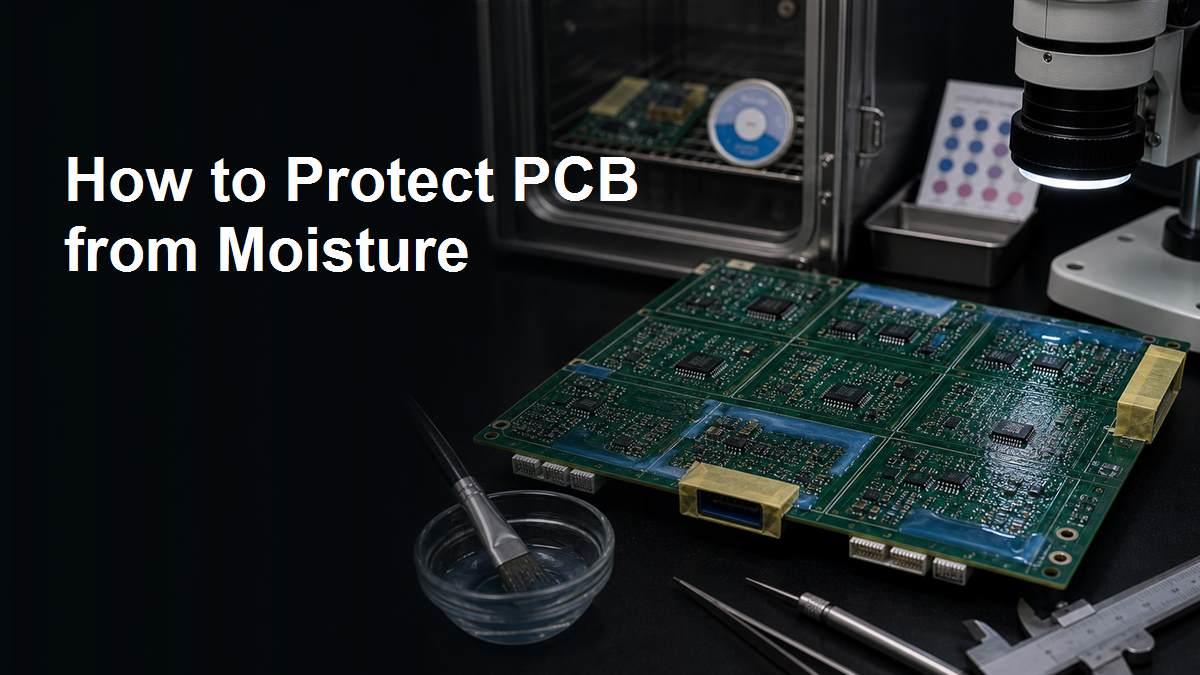
To protect PCB from moisture, first understand where the moisture risk comes from, then choose the right mix of layout spacing, material choice, conformal coating, masking, storage, cleaning control, and inspection. Moisture protection is not just “cover the board with coating.” A good plan protects the circuit while keeping connectors, test points, sensors, switches, and heat areas usable.
This guide explains moisture protection in a teacher-style order: what moisture does, when protection is needed, which method to choose, what mistakes to avoid, and what files to send for manufacturing review.
Start With How Moisture Damages a PCB
Moisture can sit on the board surface, enter residues, collect under components, or condense when temperature changes. It may cause corrosion, leakage current, dendrite growth, unstable sensor readings, insulation failure, or coating defects.
Think of moisture as a hidden electrical path. Dry air may not cause trouble, but humid air plus flux residue, tight spacing, high impedance circuits, or voltage difference can create reliability problems over time.
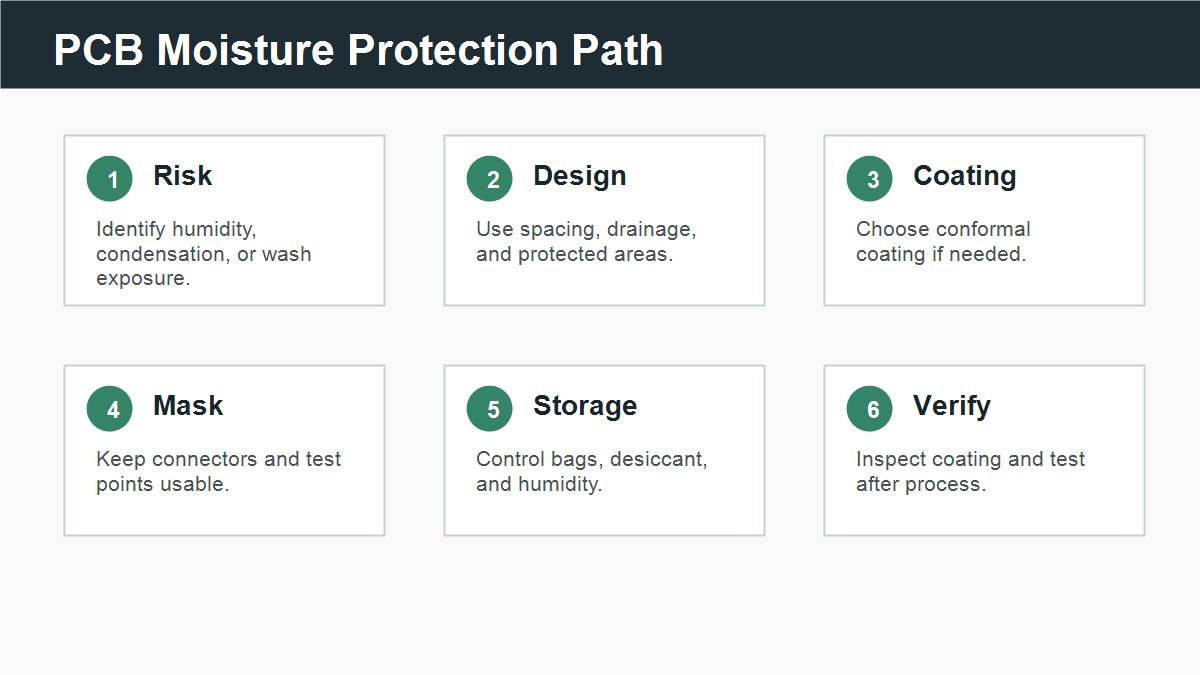
Identify the Real Moisture Exposure
Before choosing protection, ask what the PCB will actually face. Indoor humidity, outdoor condensation, washing, marine air, industrial chemicals, high-voltage spacing, and long storage create different risks. The same coating choice does not fit every board.
For example, a consumer indoor board may only need good cleaning and packaging, while an outdoor sensor board may need conformal coating, connector sealing, drainage design, and stronger inspection.
Use Design Choices Before Coating
Moisture protection starts in design. Increase spacing where voltage or contamination risk is high. Avoid trapping liquid under parts. Keep sensitive analog or high-impedance nodes away from dirty or exposed areas. Add drainage, ventilation, or enclosure protection when needed.
If the board has controlled impedance, dense vias, or tight spacing, moisture protection should be reviewed together with layout and stackup. PCBTRY’s article on how to read PCB layout helps explain how to turn layout observations into DFM questions.
Choose Coating, Potting, or Packaging by Risk
Conformal coating protects the board surface with a thin film. Potting gives stronger encapsulation but makes repair harder and can affect heat. Moisture barrier bags and desiccant help during storage and shipping but do not replace product-level protection.
| Method | Best Use | Main Caution |
| Conformal coating | Humidity, dust, light contamination | Mask connectors, test points, switches, and sensors |
| Potting | Harsh environment or mechanical protection | Hard repair and thermal stress risk |
| Cleaning control | Reduce residue that absorbs moisture | Must match flux and component sensitivity |
| Moisture packaging | Storage and shipping | Does not protect the board in use |
Mask Areas That Should Not Be Coated
Coating the wrong area can create a new problem. Connectors, switches, sockets, test pads, programming pads, sensor openings, thermal pads, and mechanical contacts may need to stay uncoated. If they are coated, testing, plugging, sensing, or heat transfer may fail.
Always send a coating drawing or clear notes that show coated and keep-out areas. If no one knows what to mask, the result may look protected but fail in assembly, testing, or field service.
Control Cleaning and Storage
Flux residue and contamination can hold moisture, so cleaning quality matters before coating or packing. A board should be clean and dry before moisture protection is applied. If residue is sealed under coating, the coating may trap the problem instead of solving it.
For PCBA cleaning logic, QFPCB’s flux cleaning article is assembly-focused, while PCBTRY manufacturing review should confirm solder mask, surface finish, storage, and process requirements before production.
Moisture Protection Checklist Before Quote
- Define the environment: indoor humidity, outdoor condensation, wash, marine air, or chemicals.
- Mark sensitive circuits, high-voltage areas, sensors, connectors, and test points.
- Decide whether the board needs cleaning control, coating, potting, packaging, or enclosure design.
- Provide coating keep-out areas and inspection requirements.
- Confirm solder mask, surface finish, material, spacing, and board thickness.
- Ask how coated boards will be dried, inspected, tested, and packed.
- Record whether rework or repair is still required after protection.
- Send drawings or photos if certain areas must not be coated.
FAQs About Protecting PCB From Moisture
Is conformal coating enough to protect a PCB from moisture?
It helps, but it is not always enough. The environment, cleaning, masking, enclosure, and inspection also matter.
Can moisture damage a PCB that is not powered?
Yes. Moisture can contribute to corrosion or contamination during storage, especially with residue or poor packaging.
Should every PCB be coated?
No. Coating adds process cost and can affect connectors, testing, repair, sensors, and heat. Use it when the risk justifies it.
What areas should not be coated?
Connectors, sockets, switches, test pads, programming pads, sensor openings, and some thermal areas may need masking.
Does solder mask protect against moisture?
Solder mask provides surface insulation and protection, but it is not the same as a full moisture protection system.
Can packaging protect PCB from moisture?
Packaging can protect during storage and shipping, but it does not protect the board during operation after installation.
What information should I send for moisture protection review?
Send Gerbers, stackup, use environment, coating areas, keep-out areas, cleaning needs, inspection standard, quantity, and photos if helpful.
Can PCBTRY review moisture protection requirements?
Yes. Send files and environment details to [email protected] for manufacturing review.
What is the biggest moisture protection mistake?
The biggest mistake is choosing coating without defining the real environment, sensitive areas, and keep-out zones.
Send Moisture Protection Requirements for Review
If your PCB will face humidity, condensation, washing, outdoor use, or long storage, send Gerbers, stackup, material notes, use environment, coating areas, keep-out areas, quantity, and inspection requirements to [email protected]. PCBTRY can review manufacturability and moisture protection options before production.


0 Comments